

Sustainable Development Goals (498)
The Sustainable Development Goals are a universal call to action to end poverty, protect the planet and improve the lives and prospects of everyone, everywhere. The seventeen Sustaiable Development Goals (SDG) were adopted by all UN Member States in 2015, as part of the 2030 Agenda for Sustainable Development which set out a 15-year plan to achieve the Goals.
Children categories


2 Zero Hunger (13)
End hunger, achieve food security and improved nutrition and promote sustainable agriculture

3 Good Health and Well-Being (65)
Ensure healthy lives and promote well-being for all at all ages

4 Quality Education (45)
Ensure inclusive and equitable quality education and promote lifelong learning opportunities for all

6 Clean Water and Sanitation (34)
Ensure availability and sustainable management of water and sanitation for all

7 Affordable and Clean Energy (35)
Ensure access to affordable, reliable, sustainable and modern energy for all

8 Decent Work and Economic Growth (10)
Promote sustained, inclusive and sustainable economic growth, full and productive employment and decent work for all

9 Industry, Innovation and Infrastructure (30)
Build resilient infrastructure, promote inclusive and sustainable industrialization and foster innovation


11 Sustainable Cities and Communities (162)
Make cities and human settlements inclusive, safe, resilient and sustainable

12 Responsible Consumption and Production (59)
Ensure sustainable consumption and production patterns

14 Life Below Water (83)
Conserve and sustainably use the oceans, seas and marine resources for sustainable development

15 Life on Land (152)
Protect, restore and promote sustainable use of terrestrial ecosystems, sustainably manage forests, combat desertification, and halt and reverse land degradation and halt biodiversity loss

16 Peace, Justice and Strong Institutions (31)
Promote peaceful and inclusive societies for sustainable development, provide access to justice for all and build effective, accountable and inclusive institutions at all levels

17 Partnerships for the Goals (20)
Strengthen the means of implementation and revitalize the global partnership for sustainable development
Happy Earth Day to you! Happy Earth Day to YOU.
Written by EarthSolidarity!™
What can YOU, and those around you, do to make your lifestyle more sustainable?
Today is a good opportunity to make a resolution or a promise to yourself and those around you to adopt a new habit or practice that will reduce your environmental impacts. Perhaps, you have already taken such a step a while ago and you may now scale it up or add something else to it?
EarthSolidarity!™ is focusing on individual and small-group initiatives that facilitate practical, local, down-to-Earth actions that can readily be replicated by many and thus add up to significant improvements in the community, the bioregion and — through equivalent locally and regionally tuned initiatives — contribute to our national and even global environmental health.
You may have found that it’s not so difficult, and perhaps you discovered some ways of making it easier or more successful than you thought possible at first. If so, please This email address is being protected from spambots. You need JavaScript enabled to view it..
Encourage those next to you to adopt the same or similar action. We are looking for leaders like you that are willing to help organize or just advise small environmental action groups at the neighborhood level or within local businesses and organizations.
University of Tennessee leads the way in this year’s local Earth Day observances
KNOXVILLE — It’s once again time to celebrate Earth Day — Earth Week, really — and as it has in past years, Hellbender Press has a few suggestions for some fun ways for families to celebrate the planet we call home on April 22 and beyond.
The theme of this year’s Earth Day, which is its 55th observance, is Our Power, Our Planet.
If you have items you’d like to add to the list, please email This email address is being protected from spambots. You need JavaScript enabled to view it..
This list will be updated.
STEAM Earth Day event
— 6-7 p.m., Tuesday, April 22, Carter Branch Library, 9036 Asheville Highway, Knoxville. Register here.
The University of Tennessee Office of Sustainability Earth Week
— The sustainability office has an entire month devoted to Earth Day.
— 3 p.m.-5 p.m., Tuesday April 22, UT Gardens, 2514 Jacob Drive: Join a cleanup of Third Creek.
— 11 a.m.-2 p.m. April 22, 21st Mortgage Plaza, UT Earth Day Festival will feature fun games, food and drinks.
Babies and Blooms Earth Day Festival
— 10 a.m.-1 p.m. Saturday, April 26, INCubator, 100 Cherokee Blvd., Chattanooga
Updated 4/18: Smoky gray: Former Smokies leader warns of more funding cuts; popular campsites remain closed; still little information on cuts at Great Smoky Mountains National Park
Written by Elan Young, Ben Pounds and Thomas Fraser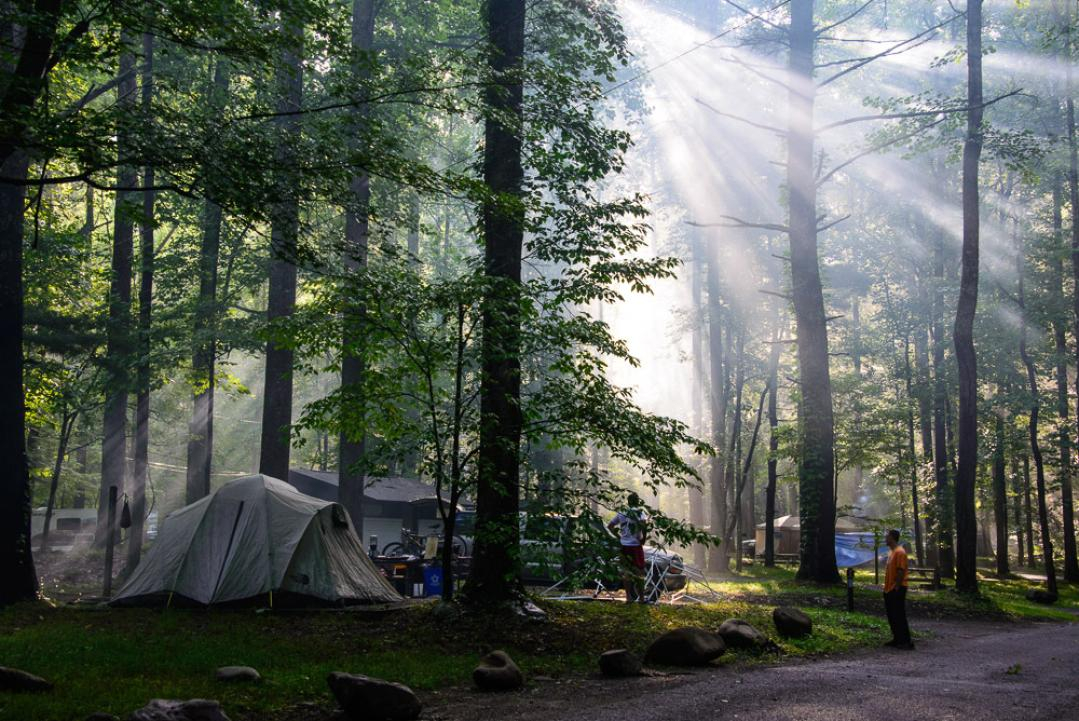 Campers are seen enjoying a morning at Elkmont Campground in Great Smoky Mountains National Park. Elkmont is one of the Smokies campgrounds still open. National Park Service
National parks advocate and former Smokies official warns of funding shortfalls as closures continue, concerns persist, and people resist
KNOXVILLE — Funding for national parks has never amounted to much, and the federal government will cut even more if people don’t speak out in defense of the country’s natural and ecological crown jewels.
That was the message from Phil Francis, chairman of the Coalition to Protect American National Parks and former acting superintendent of Great Smoky Mountains National Park. He spoke to an audience at Knoxville’s Schulz Bräu Brewing Company hosted by Discover Life in America. Francis said that due to rising concerns his organization grew from 500 members to over 4,000 during the Trump administration. The coalition, he said, includes many people like himself who used to work for the park system, including the former superintendent of Acadia National Park.
Francis advocated that others should lobby government officials to continue to support the parks.
“If you don’t speak up, it makes it a lot more difficult,” he told the audience.
- elan young
- smokies job cuts
- federal job cuts
- rangers
- smokies rangers fired
- how many lost jobs at smokies
- smokies parking fees
- great smoky mountains economic impact
- national parks conservation association
- association of national park rangers
- hellbender press reporting on job cuts
- probationary workers fired
- great smoky mountains national park
- big south fork national river and recreation area
- maintenance backlog
- jeff hunter
- bill wade
- cades cove loop road
- carfree experience in cades cove
- carfree wednesdays in cades cove
- garry shores
- townsend
- townsend protest
- gatlinburg protest
- phil francis
- discover life in america
- ben pounds
- national park funding
- trump national park cuts
Wetlands protections built an industry. Rollbacks could erode it.
Written by Cassandra Stephenson and Delany Dryfoos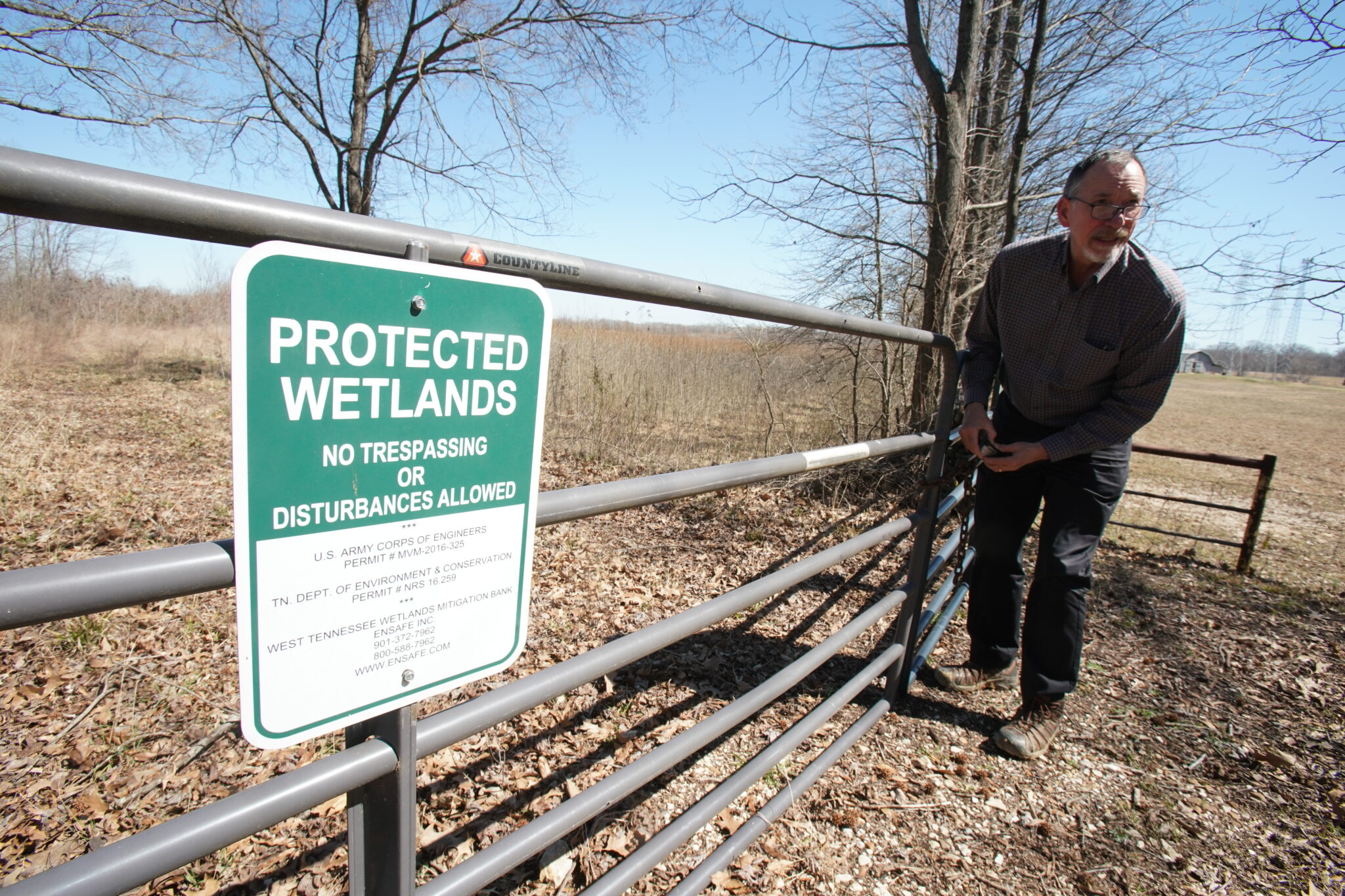 Paul Stoddard, a principal at environmental consulting firm EnSafe, unlocks the gate to the West Tennessee Wetlands Mitigation Bank in Shelby County. EnSafe planted more than 50,000 trees to restore portions of this 250-acre wetland, creating credits for developers to purchase to offset destruction of wetlands elsewhere. Karen Pulfer Focht for Tennessee Lookout
Interests of all stripes push to preserve state wetlands protections against pro-developer pressure
This story is part of the series Down the Drain from the Mississippi River Basin Ag & Water Desk, an independent reporting collaborative based at the University of Missouri in partnership with Report for America, with major funding from the Walton Family Foundation.
LEWISBURG — Fourth-generation Middle Tennessee cattle farmer Cole Liggett lined up with scientists and environmental advocates in March to urge Tennessee lawmakers not to gut the state’s historically strong protections for wetlands.
Wetlands protection has been good business for Liggett. In addition to raising cattle, he’s a manager at Headwaters Reserve, a firm that developers pay to preserve and restore wetlands and streams so they can destroy them elsewhere, called mitigation banking. If lawmakers follow through on a plan to deregulate an estimated 80 percent of the state’s isolated wetlands, that will upend the industry in Tennessee and drive up prices for developers still required to pay for mitigation, Liggett testified.
Liggett works in a growing industry that operates more than 2,500 mitigation banks nationwide, earning an estimated $3.5 billion in revenue in 2019, according to a 2023 study funded by the Ecological Restoration Business Association.
The industry is built on demand spurred by the 1972 U.S. Clean Water Act, which requires developers to offset their damage to wetlands by building or restoring wetlands nearby.
But recent federal actions to shrink the scope of that law are pushing states to choose how strictly they will regulate wetlands. The consequences of those decisions not only threaten further degradation of land, water and wildlife, but also the fortunes of an industry that has made a big business out of conservation.
Editorial: I’m from Oak Ridge. Federal cuts threaten my career as a scientist.
Written by Sarah Nelson Sarah Nelson stands with a copy of The Journal of Undergraduate Research, which ran her first scientific publication in 2003. It was researched during her time as an intern at Oak Ridge National Laboratory. Nelson is now a senior research scientist. Derek Armstrong via BlueSky
Federal science cuts, in Oak Ridge and beyond, threaten American health and innovation
Sarah Nelson, MPH, PhD, is a senior research scientist in Seattle studying the genetic causes of complex health conditions. Hellbender Press has previously reported on changes to Oak Ridge federal facilities since the start of the second Trump Administration. This op-ed was originally published by KnoxNews.
OAK RIDGE — My mother has been cleaning out the attic in her Oak Ridge house and very reasonably decided my sisters and I should become the stewards of the memorabilia from our childhoods and early adulthoods. The box she recently mailed me included my first scientific publication, from my undergraduate summer internship at the Oak Ridge National Laboratory Mammalian Genetics Section (the “Mouse House”) in 2002.
Over 20 years later, I am a senior research scientist and author on 60+ scientific publications mostly related to understanding how genetic variation contributes to different human diseases.
Even before I received that box in the mail, I had been reflecting on why I chose a career in scientific research — mainly because, since January, I am no longer sure if and how I will be able to continue pursuing it. Federally funded scientific research is being attacked and dismantled by the administration of President Donald Trump, threatening the entire scientific enterprise. The situation is dire, and I urge you to join me in staying informed and speaking out against these existential threats to science.
Hit Knoxville’s wild side and celebrate the city’s great outdoors
Written by OutlandishAF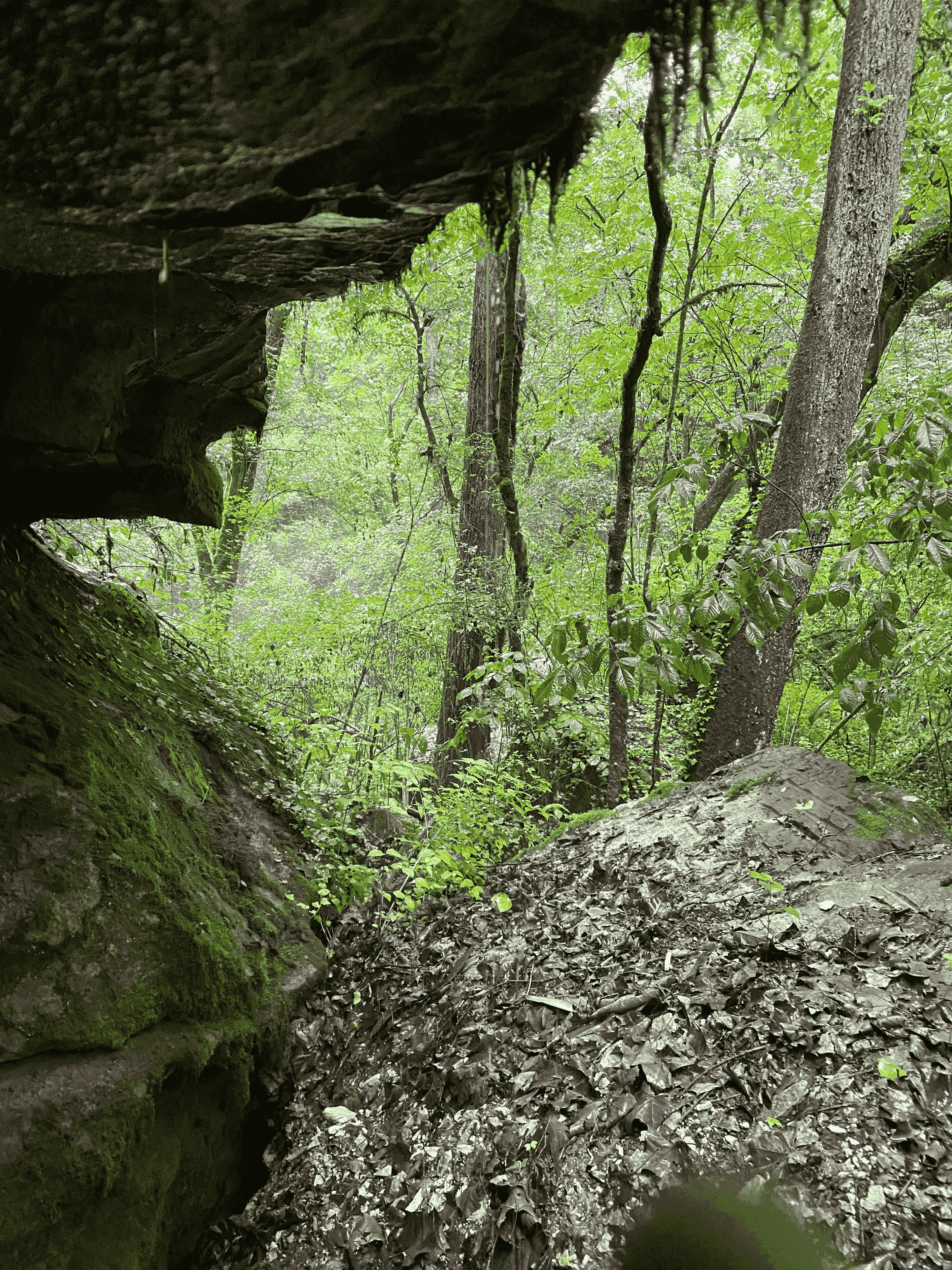 This seemingly primeval scene is actually within the city limits of Knoxville at Ijams Nature Center. The popular park is part of the Urban Wilderness and will be home to the Outlandish Adventure Festival set for May 2-3. Thomas Fraser/Hellbender Press
Outlandish Adventure Festival’s celebrations of the outdoors include climbing competitions, SUP races, guided hikes and yoga
KNOXVILLE — The city’s great outdoors is calling — and the Outlandish Adventure Festival is answering with two days packed full of adrenaline-pumping fun, scenic exploration and unforgettable experiences. Set for May 2-3 at Ijams Nature Center, this action-packed celebration of the region’s rivers, rocks, and trails invites adventurers of all levels to get outside and play.
The Outlandish Adventure Festival is a collaborative effort by the area’s rich collection of outdoor enthusiasts and organizations, including Visit Knoxville, Ijams, Knoxville’s Urban Wilderness, AMBC, Knoxville Adventure Collective, River Sports Outfitters, The Maker City, Legacy Parks and The City of Knoxville. They’ve created a weekend to inspire exploration, connection, adventure and celebration of Knoxville’s natural beauty.
- outlandish adventure festival
- knoxville outdoor activities for kid
- ijams activity
- ijams nature center
- ijams festival
- things to do in knoxville in may
- paddlesports knoxville
- knoxville outdoor activities
- spring festivals in knoxville
- knoxville’s urban wilderness
- knoxville mountain biking
- ambc
- knoxville yoga outside
- vick dyer realtor
- ole smoky distillery
State fisheries experts study fate of striped bass in TVA dam upgrade
Written by Matthew Cameron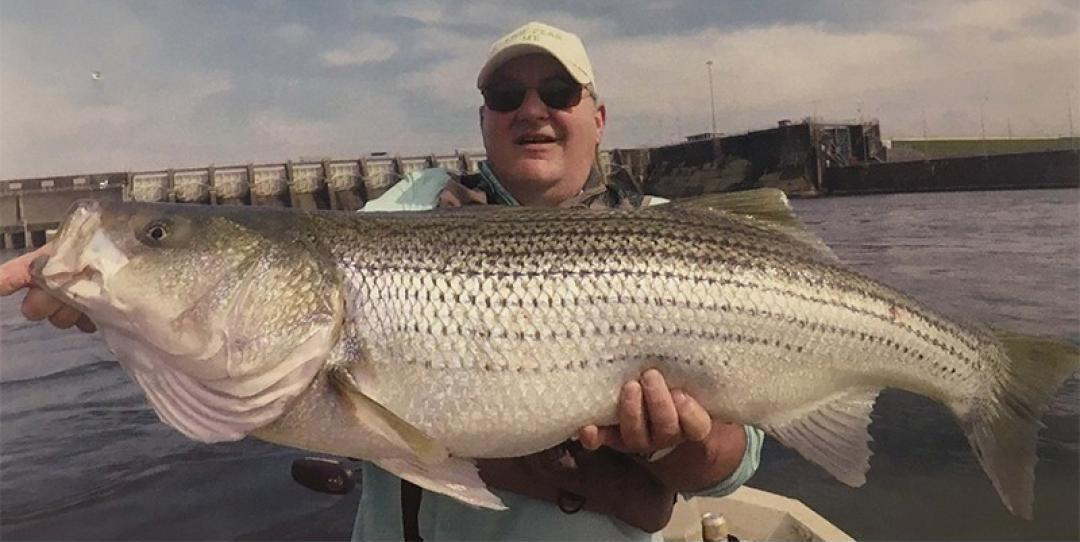 Russell Roper displays a 43-inch striped bass caught at Ft. Loudoun Dam. The Tennessee Wildlife Resources Agency is considering the effects of a TVA dam upgrade at Cherokee Lake on striper populations. TWRA
TWRA assessing potential impacts to popular game fish from changes to Cherokee Dam aeration system
Matthew Cameron is a wildlife information specialist at Tennessee Wildlife Resources Agency.
JEFFERSON CITY — The Tennessee Valley Authority has announced plans to replace the current aeration system at Cherokee Dam with new turbine technology by 2026. These upgrades, designed to improve water quality downstream, may have unintended consequences for aquatic wildlife in Cherokee Reservoir — particularly striped bass. The Tennessee Wildlife Resources Agency (TWRA) is currently evaluating these potential impacts.
The existing oxygenation lines in Cherokee Reservoir were originally installed to meet TVA’s requirement for minimum dissolved oxygen levels in water discharged below the dam. However, an unexpected benefit of this system has been the creation of a cool, oxygen-rich refuge in the reservoir during summer months — a critical survival zone for large striped bass. These fish rely on cooler, well-oxygenated water to make it through Tennessee’s hot summers, and Cherokee Reservoir provides limited natural options.
UT joins forces with two state agencies to promote healthy forests and their wildlife in Tennessee
Written by Katie Donaldson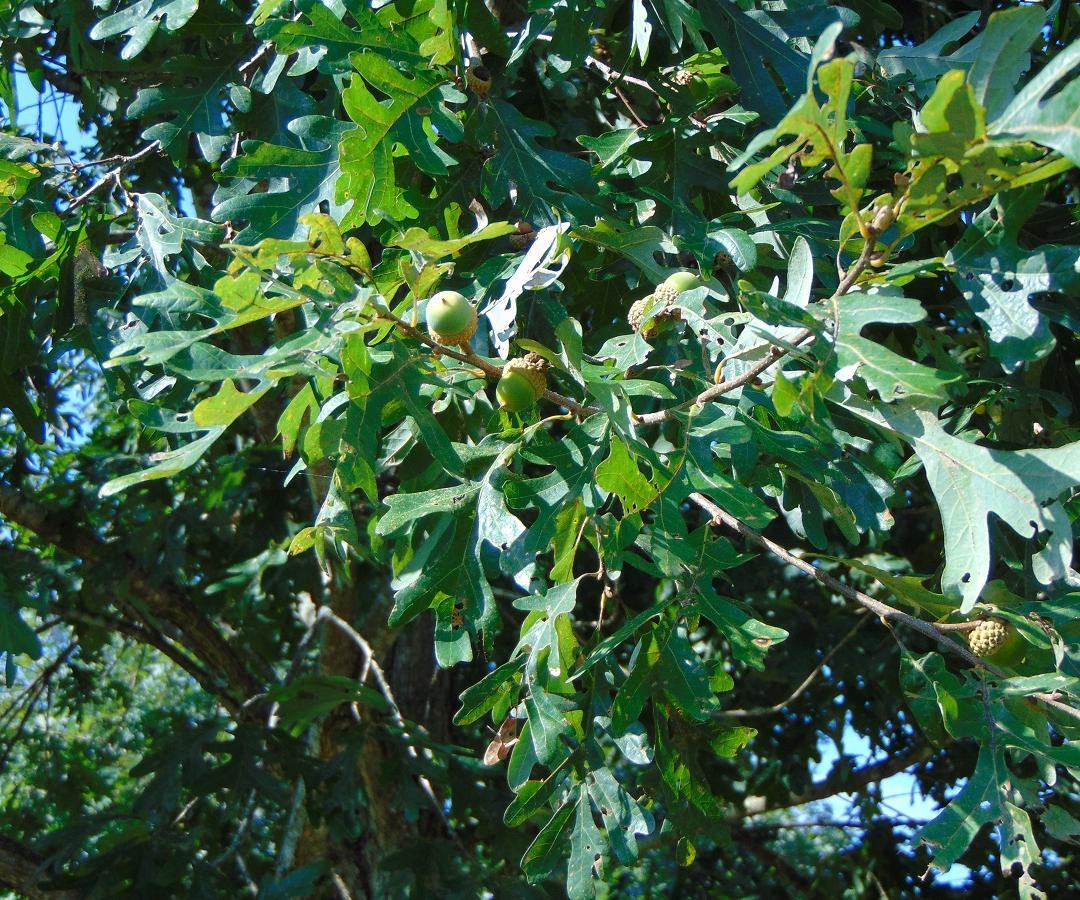 One of the goals behind a recent partnership among UTIA and state agencies is the promotion of heartier food species such as this oak. The new five-year agreement between the UTIA Tree Improvement Program, the Tennessee Division of Forestry and the Tennessee Wildlife Resources Agency focuses on developing locally adapted and genetically improved seed for future Tennessee forests. Allison Mains/UTIA
UTIA Tree Improvement Program and state agencies work together to protect and conserve the state’s forest resources
Katie Donaldson is a communications specialist for the University of Tennessee School of Natural Resources.
KNOXVILLE — A new, five-year agreement establishes how the state of Tennessee and a program in the University of Tennessee Institute of Agriculture will study and produce tree seedlings to promote the protection and conservation of Tennessee forests.
The UTIA Tree Improvement Program (UT-TIP), the Tennessee Department of Agriculture Division of Forestry (TDF) and the Tennessee Wildlife Resources Agency (TWRA) partnered on the agreement.
“Honoring our land-grant mission, we are excited about this partnership to responsibly research, develop, manage and conserve forest resources across the great state of Tennessee,” said Keith Carver, UTIA senior vice chancellor and senior vice president.
UT-TIP manages numerous seed orchards in East, Middle and West Tennessee with help from state and federal partners. It uses the orchards to provide the East Tennessee Nursery with locally adapted and genetically improved seed.
Editorial: Despite the rhetoric, responsible growth is a bipartisan goal
Written by Coffee County for Responsible Growth
Coffee County is under development pressure, but it’s not a political fight
This editorial was provided by Coffee County for Responsible Growth, but applies to planning and development debates throughout the Southeast.
MANCHESTER — We keep hearing the claim that land protection, conservation and zoning are “liberal issues.”
Let’s set the record straight: That’s simply not true.
Protecting Coffee County’s farmland, water, infrastructure and rural way of life isn’t a political talking point — it’s common sense. And it’s deeply bipartisan.
We’ve got Conservatives, Republicans, Democrats, Independents and Libertarians all standing together. Not because of party lines — but because we love where we live, we recognize the importance of agriculture, and we value community.
Play Knoxville: Put an idea pin in public recreation assets, greenways and parks
Written by City of Knoxville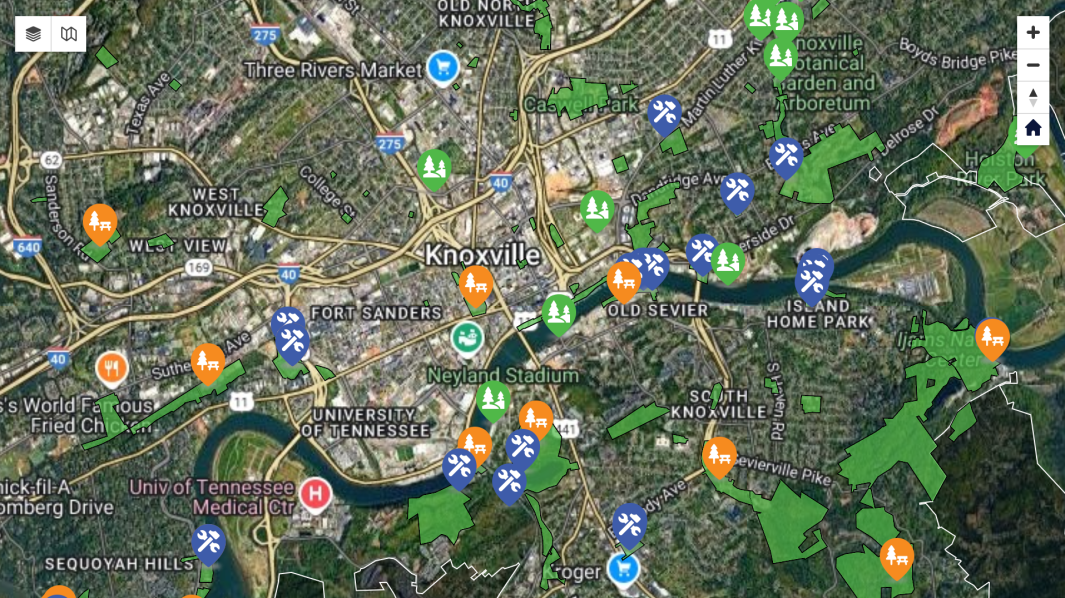 Those with ideas they want to contribute to the Knoxville Parks and Rec master plan can do so by way of an interactive map. Shown here are many of the center city’s public recreation assets. Note the size of the Urban Wilderness, a valuable natural and recreational resource accessible to the visitors and the city’s 200,000 residents. Hellbender Press
The city invites the public to share input on the future of Knoxville parks, including greenways and the urban wilderness; citizens can put a pin in a park with their ideas
KNOXVILLE — The public engagement phase for Play Knoxville, the City’s Parks & Recreation Master Plan, is now underway. The master plan will help guide investments in parks, greenways, community centers and programming over the next decade.
The planning process started in January with the formation of a steering committee of community leaders. Since then, city staff and consultants from Perez Planning + Design have conducted dozens of focus groups, one-on-one meetings with City Council and cabinet members, and site visits to nearly 70 parks across Knoxville.
Over the coming weeks, community members will have multiple opportunities to provide input through neighborhood and community meetings; public events; direct outreach and social media engagement; an interactive mapping tool and an online survey.
The Play Knoxville website is now live.
- knoxville parks master plan
- get involved in city government
- knoxville city government
- knoxville greenways
- park planning in knoxville
- perez planning + design
- play knoxville
- knoxville citizen engagement environment
- does knoxville have nice parks
- urban wilderness
- urban wilderness gateway park
- urban wilderness knoxville
Get down and dirty with history at Big South Fork celebration of spring
Written by National Park Service A farrier demonstrates his skills during a past installment of the annual Spring Planting and Music Festival at Big South Fork National River and Recreation Area, set this year for April 26. National Park Service
ONEIDA — Step back in time and experience history in motion at the 25th Annual Spring Planting and Music Festival from 9 a.m.-4 p.m. April 26 at Big South Fork National River and Recreation Area.
Traditions of early Appalachian settlers come to life at this free, family-friendly event. Visitors are invited to immerse themselves in the heritage of the Big South Fork region with live demonstrations, traditional crafts, music and hands-on activities that showcase the self-sufficient way of life practiced by generations past.
Set against the picturesque backdrop of the Oscar and Lora Blevins farm sites and the Bandy Creek area, the festival offers a rare opportunity to experience traditional Appalachian life. Visitors will see a variety of demonstrations and hands-on activities that highlight the skills and craftsmanship of early settlers.
One of the festival’s most anticipated highlights is the plowing and planting demonstration with mule and horse teams at the Lora Blevins field.
Children and adults alike will enjoy exploring old-time toys and taking part in interactive exhibits that make history come alive. Live music will be provided by some of the region’s most talented musicians.
Murky dark money group backs state wetland deregulation
Written by Cassandra Stephenson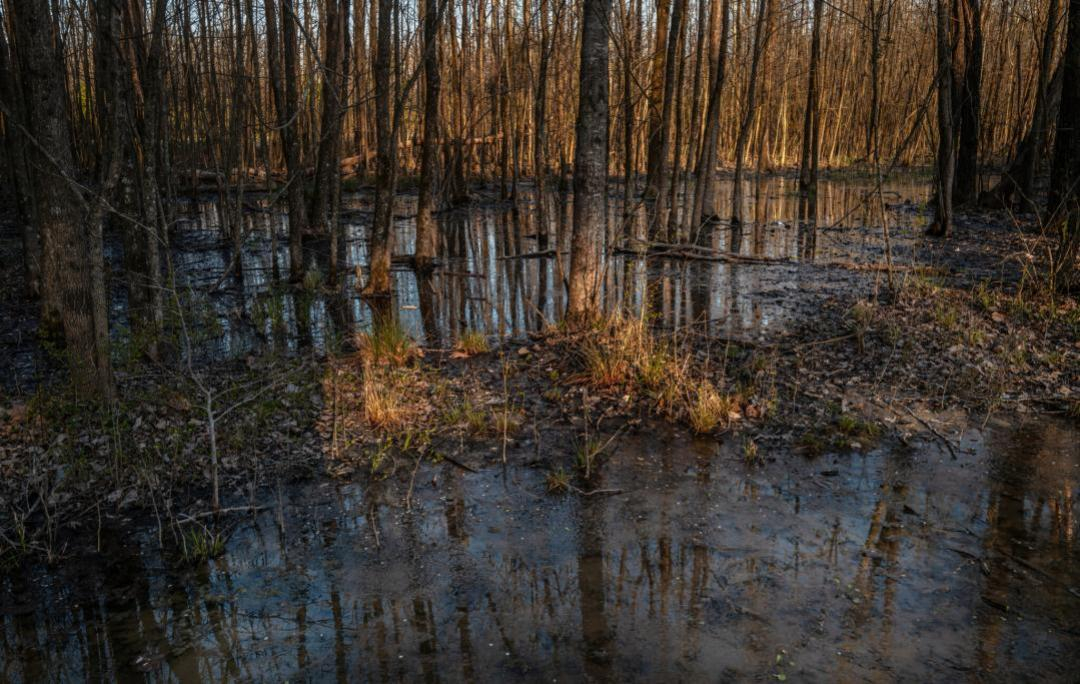 Tennessee lawmakers are considering a bill that would roll back regulations for “isolated” wetlands that don’t have surface connections to waters of the United States. John Partipilo/Tennessee Lookout
Legal firm’s representative’s testimony focused on property rights in midst of pro-developer legislative push in Tennessee
This story was originally published by Tennessee Lookout.
NASHVILLE — A representative from the legal firm that fought for deregulation of American wetlands at the U.S. Supreme Court spoke Wednesday in support of a Tennessee bill that would roll back protections for up to 80 percent of the state’s isolated wetlands.
Tennessee lawmakers are considering a bill that would significantly reduce requirements for development on wetlands, swampy lands that support diverse ecosystems, soak up floodwaters and recharge groundwater.
A state House subcommittee voted 7-2 to advance the bill to the full House Agriculture and Natural Resources Committee, where it will be heard on April 1.
The state’s current regulations predate the federal Clean Water Act, which imposed the first federal protections for wetlands in the 1970s, requiring developers to compensate for destroying wetlands by preserving or restoring them elsewhere.
But the erosion of federal regulations in the last two years has given states more power to decide how they will define and protect wetlands.
- tennessee wetlands bill
- tennessee lookout environment reporting
- tennessee environment
- clean water act
- environmental deregulation
- trump environment
- tennessee general assembly
- house environment subcommittee
- bad environmental legislation
- are wetlands protected in tennessee?
- legal firm that fought for deregulation of american wetlands
- wetland protection rollback in tennessee
- sackett v epa
- pacific legal foundation
Southeastern electric vehicle sales and investments arc against headwinds
Written by Stan Cross
Georgia and North Carolina lead EV investment and jobs; Florida tops market share and growth; Tennessee and Alabama lag behind
Stan Cross leads the Southern Alliance for Clean Energy dynamic Electric Transportation Team.
KNOXVILLE — Misinformation about the technology and the state of the electric-vehicle market is rampant. But beyond the noise are the facts, which show that the Southeast’s EV market is zipping along.
The Southeast continues to lead the nation in electric vehicles and battery-related jobs and private-sector investments. As of the end of 2024, updated data from the fifth annual Transportation Electrification in the Southeast report found that the region is home to a whopping 38 percent of the nation’s $215 billion in announced private-sector EV and battery investments and 31 percent of the anticipated 238,000 jobs. Georgia remains No. 1 in anticipated jobs and committed investments, with North Carolina a close second.

These investments deliver economic development and employment to our region’s rural communities. Toyota’s $13.9 billion battery manufacturing facility in Randolph County, North Carolina, is at the top of the rural economic development list. The facility is expected to create 5,100 jobs and is the nation’s most valuable clean energy investment. Hyundai has made the second-largest regional investment at its battery manufacturing and EV assembly plant in Bryan County, Georgia. That investment tops $6 billion and is expected to create 3,400 jobs. It has had a massive ripple effect, with Hyundai suppliers announcing more than $2.7 billion in investments and an anticipated 6,900 jobs across the state.
‘A day of hope:’ Months after rescue from drought, endangered laurel dace return to the wild
Written by Casey Phillips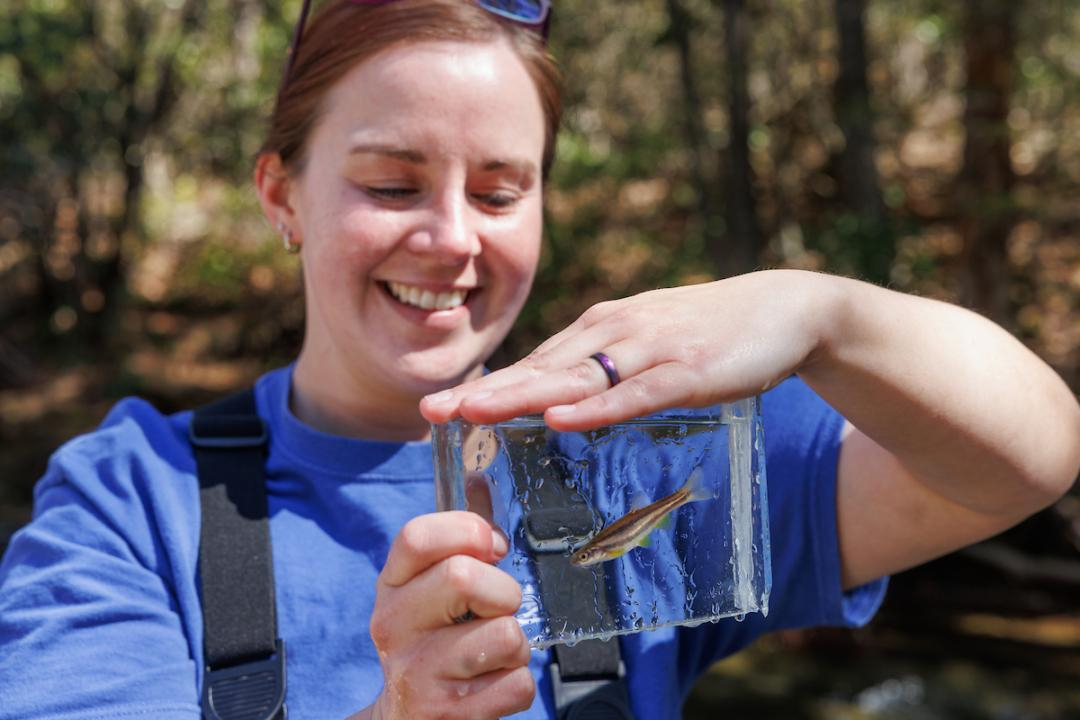 Tennessee Aquarium Reintroduction Biologist II Teresa Israel examines a critically endangered laurel dace before its reintroduction to the wild in March 2025. In July 2024, about 300 of these fish — considered by scientists to be among the most imperiled in North America — were rescued out of rapidly drying streams on Walden Ridge north of Chattanooga. Tennessee Aquarium
Improving drought conditions on Cumberland Plateau enabled return of fish after 2024 rescue
Casey Phillips is a communications specialist at the Tennessee Aquarium in Chattanooga.
CHATTANOOGA — After being saved from near-certain extinction last summer and overwintering in the expert care of biologists at the Tennessee Aquarium, more than 230 critically endangered laurel dace are finally back where they belong.
Last July, a prolonged regional drought caused many Southeast Tennessee streams to dwindle and, in some cases, dry up entirely. Atop Walden Ridge north of Chattanooga, water flow ceased at Bumbee Creek and Youngs Creek, the last sites known to support populations of Chrosomus saylori, the laurel dace.
When conditions in these rapidly disappearing waterways reached a tipping point, the Aquarium led a series of emergency rescue operations to save as many of these red-bellied, highlighter-yellow-finned minnows as possible. In coordination with the Tennessee Wildlife Resources Agency and with assistance from the U.S. Fish and Wildlife Service and the University of Georgia, about 300 laurel dace — the majority left on the planet — were relocated into the safety of human care at the Tennessee Aquarium in Chattanooga and Wolf Creek National Fish Hatchery in Jamestown, Kentucky.
According to the most recent report from the USDA’s U.S. Drought Monitor, much of Southeast Tennessee is still experiencing moderate drought conditions. However, a slightly wetter-than-average February made it safe to return these rescued minnows to the wild.
- tennessee aquarium
- laurel dace
- endangered fish
- endangered fish in tennessee
- cumberland plateau drought
- saving fish from drought
- jason miller
- anna george
- biologist ii teresa israel
- spring city, tn
- laurel dace day spring city
- chrosomus saylori
- tennesse wildlife resources agency
- twra
- us fish and wildlife service
First UT sustainability symposium offers a collaborative vision for the future
Written by Lucas Hunter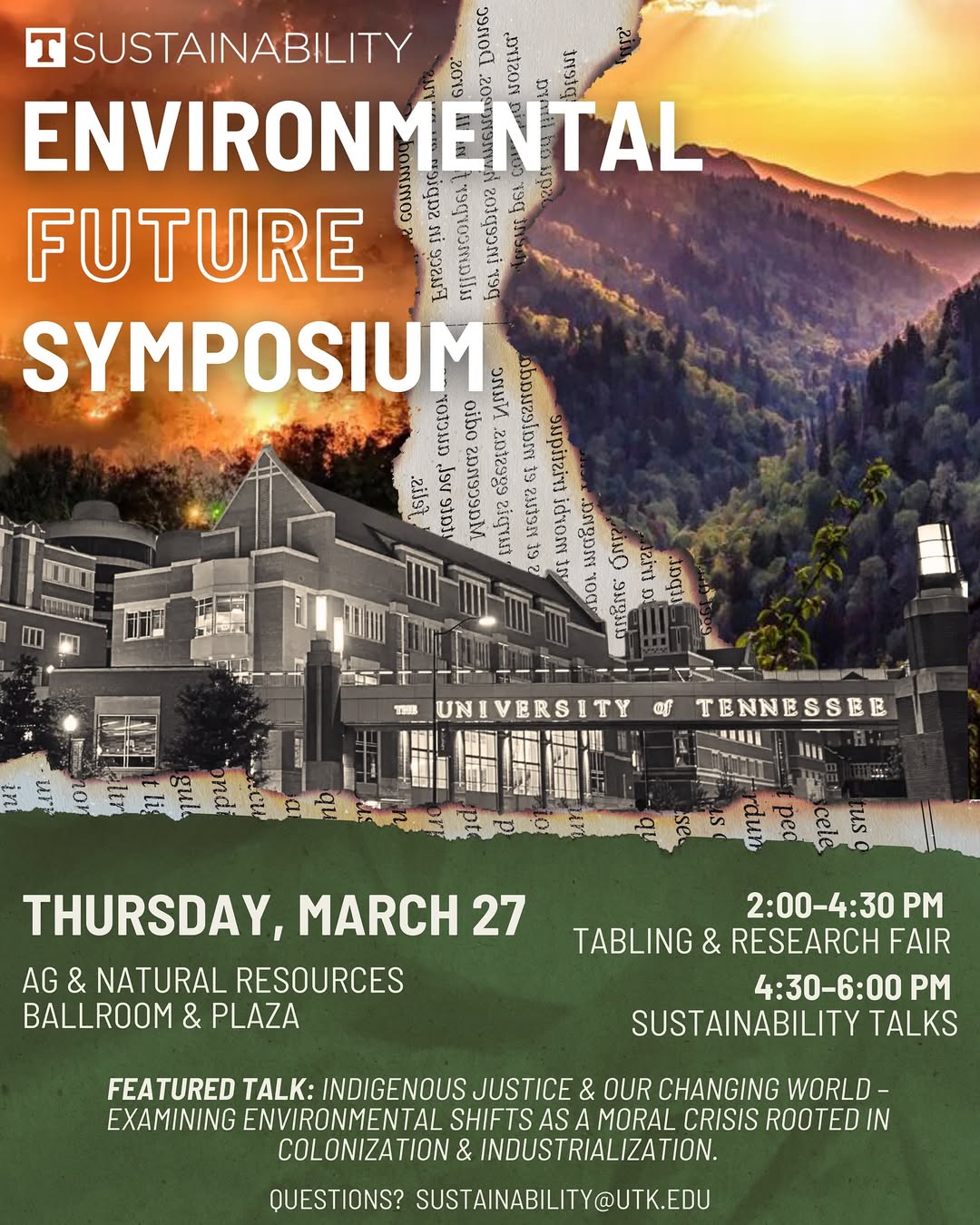
All great scientific solutions start with collaboration
KNOXVILLE — The challenges facing the planet and its inhabitants have long been too complex for any one individual or group to address, and that’s why the great advancements in modern science begin with conferences, symposiums and collaboration.
The first Environmental Future Symposium is an effort from the University of Tennessee Office of Sustainability to present a vision of the future for area residents and University of Tennessee students.
Planned for the Agriculture and Natural Resources Ballroom and Plaza from 2 p.m. to 6 p.m. March 27, the symposium is spearheaded by the office’s Alternative Energy and Transportation Coordinator Ben Gouffon. His vision for the event is simple: at the intersection of human-accelerated climate destabilization and a revitalization of the collapsing biosphere sits every individual and their actions. His hope is that this symposium is an avenue for every attendee to discover what they can do for Knoxville, the university and the planet they call home.
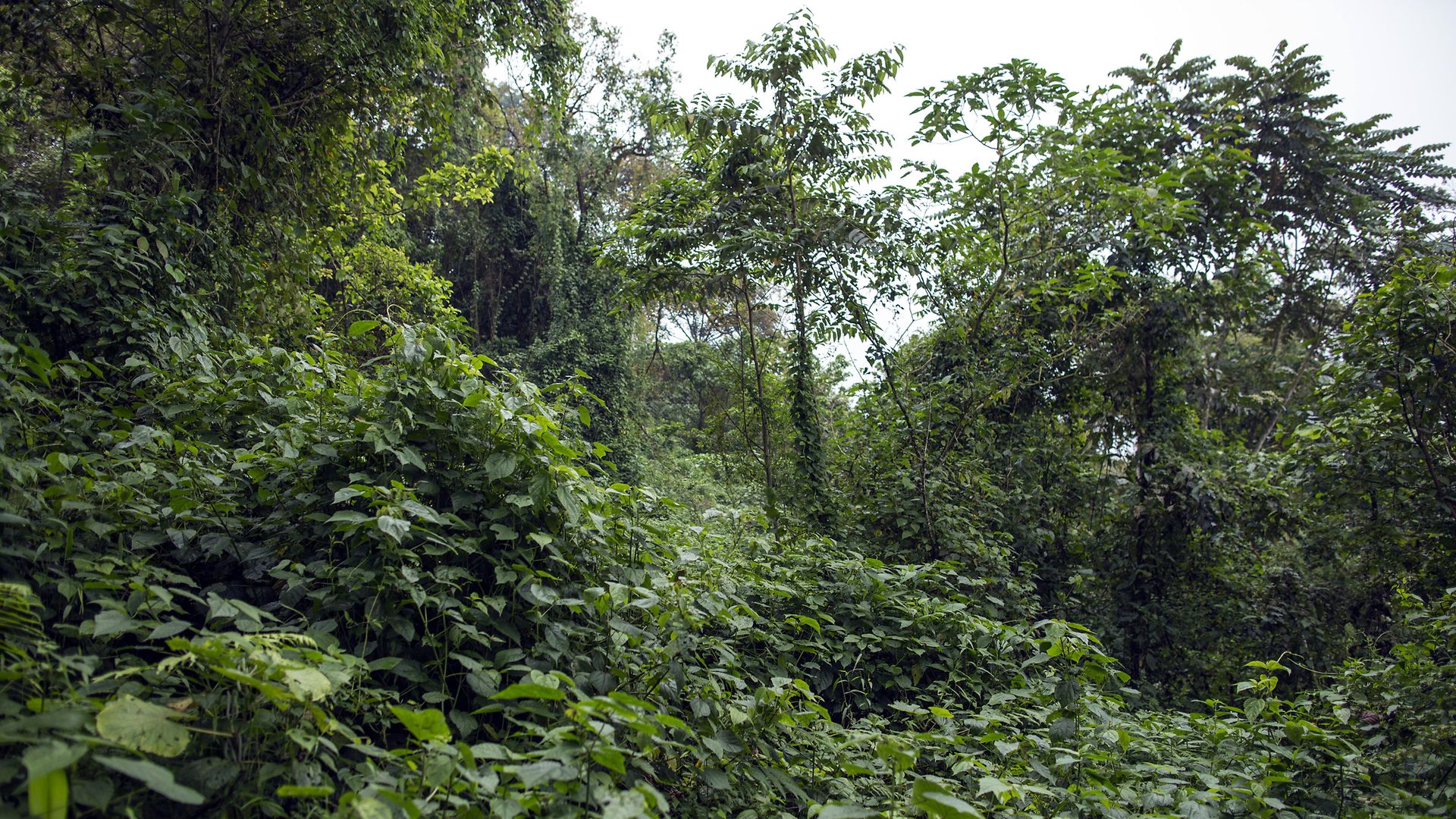 Cameroon’s vast and species-rich rainforests are of great importance for global biodiversity and the climate. They are also an important source of food and income for local people. A new study on hunting patterns in the jungles of West Africa includes research gathered by a University of Tennessee professor. Thomas Imo/German Federal Government
Adam Willcox subsisted on bush meat during African hunting study
Katie Donaldson is a communications specialist for the University of Tennessee School of Natural Resources.
KNOXVILLE — Data collected by a University of Tennessee research associate nearly 30 years ago is part of an extensive study that focuses on hunting patterns in African tropical forests.
Adam Willcox, a research associate professor in the UT Institute of Agriculture School of Natural Resources, co-authored the article, which was published recently in Nature Sustainability. “Regional patterns of wild animal hunting in African tropical forests” was also written by Daniel J. Ingram, research fellow at the University of Kent, and several other researchers. The data show how hunting management is needed to sustain wild animal populations in West and Central Africa.
The article uses data collected from 1991 to 2022 in 83 different studies to create a regional analysis of hunting patterns. Willcox contributed to the publication using research and data he gathered from 1996 to 2001 while promoting agroforestry in the U.S. Peace Corps in Cameroon. “I was in a lowland tropical forest. We did not have domestic alternatives for protein. We had to eat wild animals,” Willcox said. “My research followed 100 hunters around a wildlife sanctuary in Cameroon and their harvests.”
- university of tennessee professor ate research subjects
- adam willcox
- ut institute of agriculture
- human hunting patterns
- bush meat
- hunting management
- ut ag research
- nature sustainability
- wild animal populations in west and central africa
- biodiversity
- subsistence hunting
- agroforestry
- university of kent
More...
Editorial: Old paradigms persist in proposed development of urban forest at UNC Asheville
Written by Noah Poulos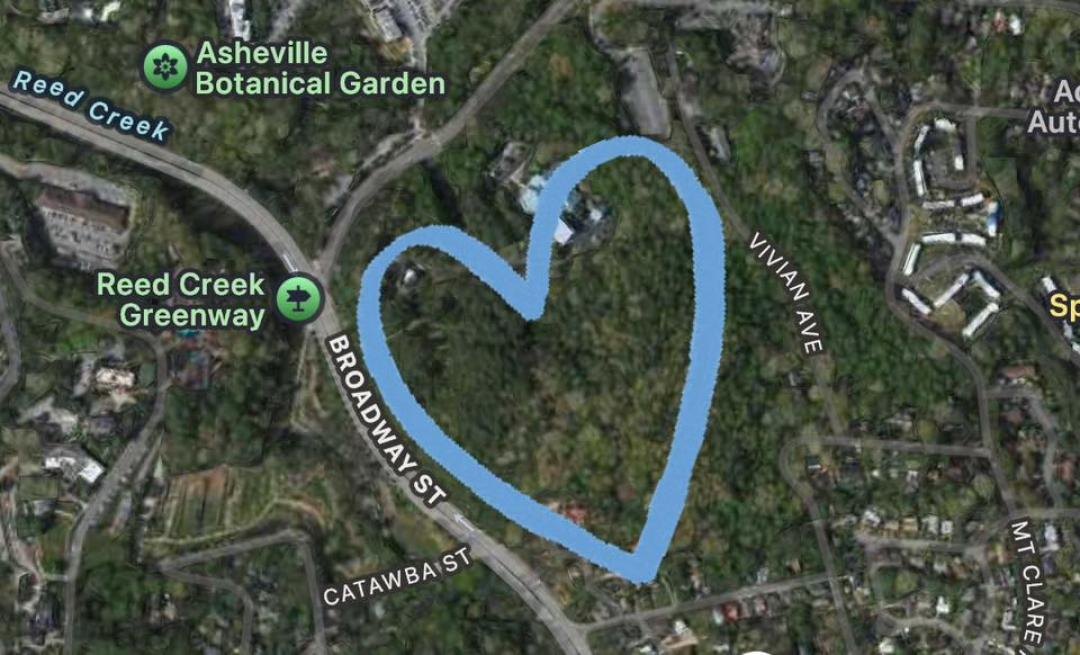 UNC Asheville seems poised to develop a 45-acre forested tract in North Asheville into university amenities and housing. A grassroots movement has emerged to fight the proposal, such as Save the Woods, which has 3,000 members on Facebook. Save the Woods via social media
The university indicates development of 45-acre wooded property is pending as community rallies
Noah Poulos is a farmer, writer, educator and UNC Asheville graduate who lives in Western North Carolina.
ASHEVILLE — Many have come to know a small forest in North Asheville as an extension of their home.
In these humble woods of the Experimental Forest, near a botanical park and U.S. Forest Service research station, pileated woodpeckers peck vigorously in the canopy. Towering pines dapple the light on the forest floor as day turns to dusk.
It is a place that has become a mainstay of this community and people are deeply connected to it — through stories, memories, relationships and a deep appreciation for what a small woodland can offer.
This forest, while open to the public, is owned by UNC Asheville, which recently shared plans to develop it for additional campus amenities.
Opposition has arisen to the university’s development plans, especially since a statement from the institution that strongly implies development will proceed as part of an overall expansion and revenue plan.
Industry-backed legislation would bar the science behind hundreds of environmental protections
Written by Sharon Lerner Trichloroethylene is among the chemicals deemed a serious public health risk by way of the Environmental Protection Agency’s IRIS database. Legislation in Congress could bar the use of IRIS and its associated scientific methods from being used to calculate the environmental and human health risks of chemicals such as TCE, a proven carcinogen. ChemLibrarian/Wikipedia Commons
Two bills in Congress would prohibit the Environmental Protection Agency from using hundreds of chemical assessments completed by its IRIS program in environmental regulations or enforcement.
This story was originally published by ProPublica.
WASHINGTON, D.C. — For decades, Republican lawmakers and industry lobbyists have tried to chip away at the small program in the Environmental Protection Agency that measures the threat of toxic chemicals.
Most people don’t know IRIS, as the program is called, but it is the scientific engine of the agency that protects human health and the environment. Its scientists assess the toxicity of chemicals, estimating the amount of each that triggers cancer and other health effects. And these values serve as the independent, nonpartisan basis for the rules, regulations and permits that limit our exposure to toxic chemicals.
Now IRIS faces the gravest threat to its existence since it was created under President Ronald Reagan four decades ago.
Legislation introduced in Congress would prohibit the EPA from using any of IRIS’ hundreds of chemical assessments in environmental rules, regulations, enforcement actions and permits that limit the amount of pollution allowed into air and water. The EPA would also be forbidden from using them to map the health risks from toxic chemicals. The bills, filed in both the U.S. Senate and House of Representatives earlier this year, are championed by companies that make and use chemicals, along with industry groups that have long opposed environmental rules. If it becomes law, the “No IRIS Act,” as it’s called, would essentially bar the agency from carrying out its mission, experts told ProPublica.
“They’re trying to undermine the foundations for doing any kind of regulation,” said William Boyd, a professor at UCLA School of Law who specializes in environmental law. Boyd noted that IRIS reports on chemicals’ toxicity are the first step in the long process of creating legal protections from toxic pollutants in air and water.
“If you get rid of step one, you’re totally in the dark,” he said.
If the act passes, companies could even use the law to fight the enforcement of environmental rules that have long been on the books or permits that limit their toxic emissions, environmental lawyers said.
- iris
- propublica
- chemical regulation
- chemical pollution epa
- chemical database
- no iris act
- sharon lerner
- tce
- epa chemical regulations
- trump and environment
- environmental regulations
- carcinogens
- public health protection
- worst chemicals
- forever chemicals
- propublic environment
- propublica environment reporting
- best environmental reporting
- integrated risk information system
- toxic pollution
- environmental protection agency
Butterflies decline by 20 percent since 2000 due in large part to pesticide use
Written by Eliza Grames A postman butterfly feeds on a bloom in the Tennessee Aquarium’s Butterfly Garden in Chattanooga. At any one time, the garden may host 1,000 to 1,500 butterflies representing more than 200 species. Courtesy Tennessee Aquarium
A third of species declined by half in U.S.; relatively simple steps can improve outlook
This story was originally published by The Conversation.
If the joy of seeing butterflies seems increasingly rare these days, it isn’t your imagination.
From 2000 to 2020, the number of butterflies fell by 22% across the continental United States. That’s 1 in 5 butterflies lost. The findings are from an analysis just published in the journal Science by the U.S. Geological Survey’s Powell Center Status of Butterflies of the United States Working Group, which I am involved in.
We found declines in just about every region of the continental U.S. and across almost all butterfly species.
Overall, nearly one-third of the 342 butterfly species we were able to study declined by more than half. Twenty-two species fell by more than 90 percent. Only nine actually increased in numbers.
Some species’ numbers are dropping faster than others. The West Coast lady, a fairly widespread species across the western U.S., dropped by 80 percent in 20 years. Given everything we know about its biology, it should be doing fine — it has a wide range and feeds on a variety of plants. Yet its numbers are absolutely tanking across its range.
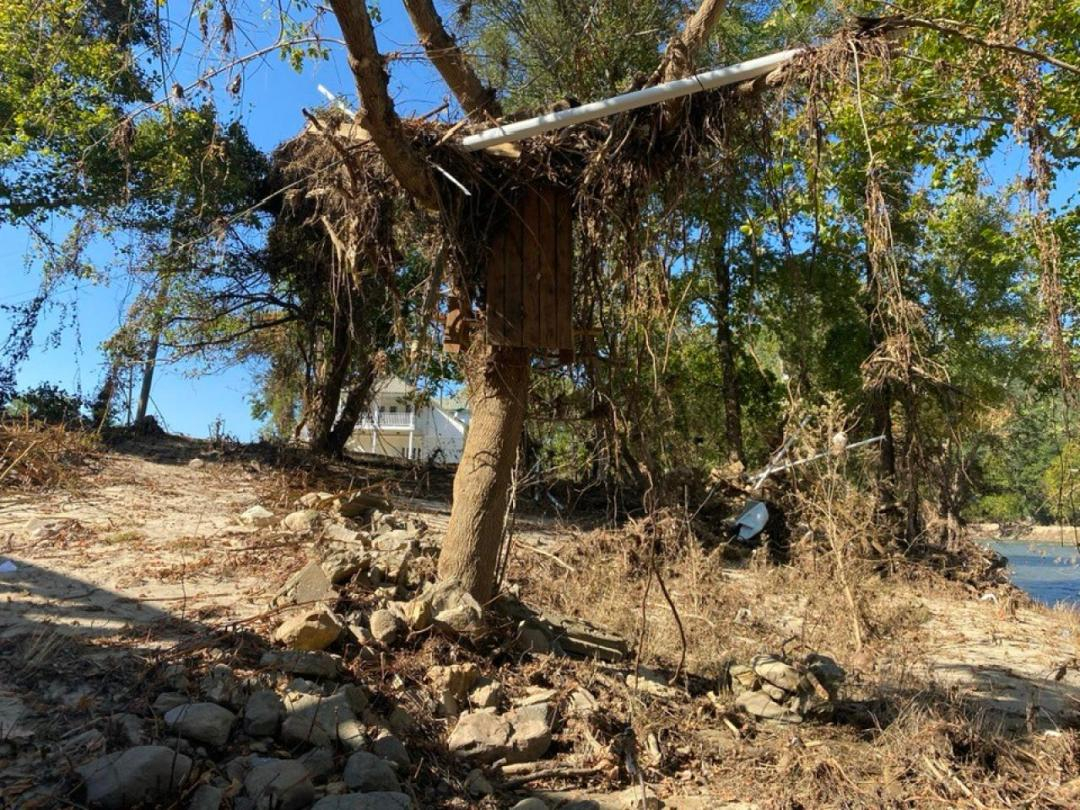 Debris hangs from trees on the banks of the French Broad River near the main building of Hot Springs Resort and Spa. The river gauge at Hot Springs was offline during the main rain events immediately preceding the Sept. 27, 2024 floods but registered a peak just under 21 feet. The record stage is 22 feet, but that record will likely fall after review of provisional weather-gauge data by the National Weather Service. Much of the debris generated by flooding on the French Broad River in Western North Carolina made its way downstream toward Douglas Lake in Tennessee. Thomas Fraser/Hellbender Press
Volunteers needed for 36th Ijams River Rescue set for March 8
KNOXVILLE — The thousand-year rains brought by Hurricane Helene flushed incalculable amounts of garbage from multiple major watersheds in East Tennessee and Western North Carolina in late September 2024. The Tennessee Wildlife Resources Agency and Tennessee Valley Authority, for instance, resorted to booms and cranes to corral and collect thousands of tons of garbage along more than 200 miles of Douglas Lake shoreline. The cleanup continues.
High water downstream also carried debris and detritus of every description into Knox County via the French Broad River, which then deposited it along urban and regional lake and stream banks.
Removing this pulse of pollution and flotsam from the Tennessee River, already known as a conduit of microplastics, could take years or generations. You can start the process March 8 along multiple TVA lakes in the area. We all live downstream.
Here’s the release from Ijams Nature Center, one of the main sponsors of the annual event:
Volunteer and make your community a cleaner, healthier place to live, work and play during the 36th annual Ijams River Rescue from 10 a.m. to 1 p.m. Saturday, March 8. A severe weather date is set for Saturday, March 15.
Ijams Nature Center’s annual cleanup event brings together hundreds of individuals, families, Scout troops, businesses and church groups to remove tons of trash and tires from sites along the Tennessee River, creeks and streams. Sites are typically located in Knox, Anderson and Blount counties.