
Sustainability (498)
Children categories

Sustainable Development Goals (912)
The Sustainable Development Goals are a universal call to action to end poverty, protect the planet and improve the lives and prospects of everyone, everywhere. The seventeen Sustaiable Development Goals (SDG) were adopted by all UN Member States in 2015, as part of the 2030 Agenda for Sustainable Development which set out a 15-year plan to achieve the Goals.
Federal home energy rebate dollars are rolling out to states
Written by Cassandra Stephenson The state of Tennessee will partner with the Tennessee Valley Authority to carry out a federal home energy efficiency rebate program that was included in the federal Inflation Reduction Act. Getty Images via Tennessee Lookout
What might Tennessee’s energy-efficiency rebate plan look like, and when?
This article was originally published by Tennessee Lookout.
NASHVILLE — More than $8 billion flagged for home energy rebates in the Inflation Reduction Act is beginning to trickle out of federal coffers, but Tennessee residents will likely have to wait until the spring of 2025 to start applying for their chunk of change.
Each state must shape its own plan to dole out the funding, which can put money residents spend on energy efficiency upgrades back into the households’ pockets if they meet certain requirements. New York and Wisconsin became the first states to begin offering federally funded home energy rebates to their residents in mid-August, two years after President Joe Biden signed the Inflation Reduction Act and its many energy-focused subsidies into law.
In total, the rebate funds are expected to impact between 1 to 2 percent of households across the nation.
Tennessee submitted its application to the U.S. Department of Energy (DOE) for the more than $167 million earmarked for the state in mid-August. Tennessee’s 2025 rollout timeline largely depends on how quickly the DOE approves the state’s applications and when Tennessee can execute a contract with the Tennessee Valley Authority — its chosen implementer — to put the program into action.
- home energy rebates
- clean energy
- energy efficiency
- can i get a home energy rebate?
- inflation reduction act
- home efficiency rebates
- biden clean energy
- inflation reduction act tennessee
- home electrification and appliance rebates
- tennessee home energy efficiency rebates
- cassandra stephenson
- tennessee lookout
- tva energy efficiency plan
- federal energy rebates
Calling all climbers (and hikers and bikers): Come help clean Obed crags
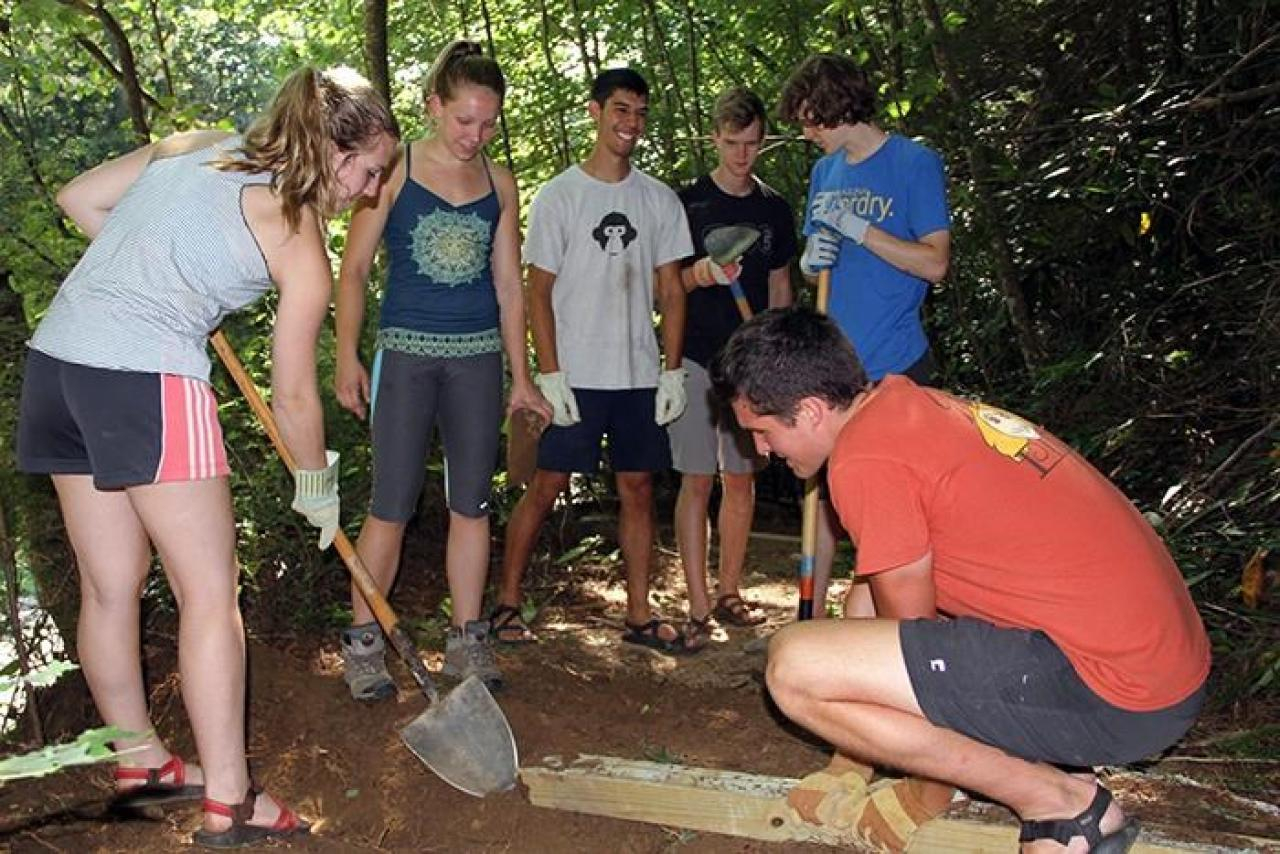 The annual Obed Adopt-a-Crag event is set for Sept. 14 and will include access trail maintenance such as that performed here by volunteers at a previous event. National Park Service
WARTBURG — The East Tennessee Climbers Coalition and Obed Wild and Scenic River will host the park’s annual Adopt-a-Crag event on Saturday, Sep. 14 2024
Volunteers are needed to help with a variety of projects including general trail maintenance and litter pickup. Please meet at the Lilly Pad Hopyard Brewery, 920 Ridge Road, Lancing, at 10 a.m. to register and receive a project assignment. Due to limited parking, carpooling is suggested. Please bring your own lunch and water. Volunteers are also encouraged to bring hand tools, gloves, sunscreen, and insect repellant.
After completing their projects, volunteers are invited to spend the day climbing their favorite routes or enjoying other recreational opportunities in the park. Following the event, the ETCC will be hosting a volunteer appreciation event at the Lilly Pad.
Ginseng collection banned in Pisgah, Nantahala national forests
Written by Adam Rondeau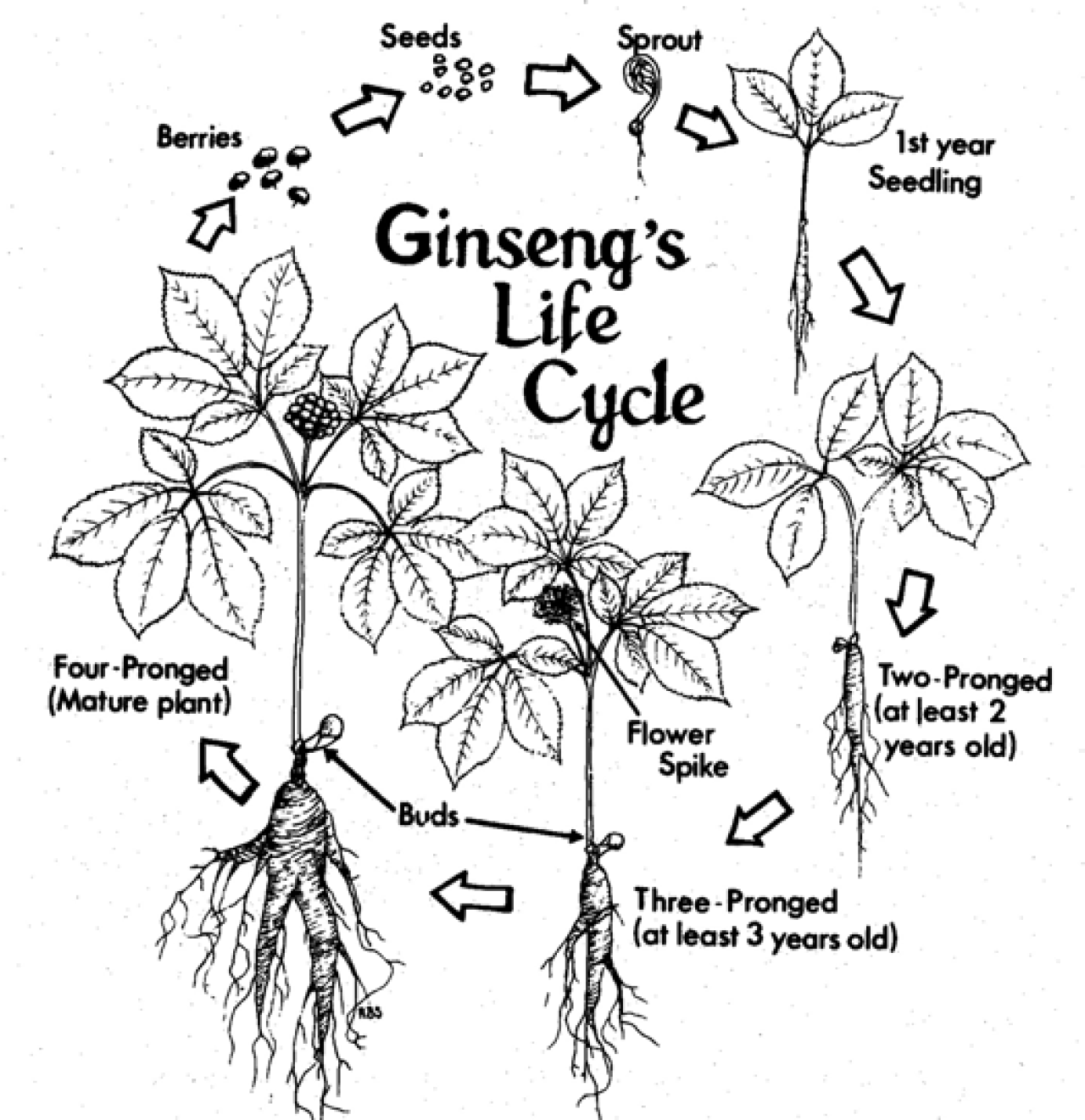 The long maturation time of American ginseng makes it susceptible to overharvesting. A ban on collecting the plant in Nantahala and Pisgah national forests remains in place. Illstration: Ohio State Extension Service
Wild populations of the plant remain too low to sustainably harvest
Adam Rondeau is a public affairs specialist with the U.S. Forest Service.
ASHEVILLE — The Forest Service pause on issuing permits to harvest American ginseng in the Nantahala and Pisgah national forests will remain in place for the 2024 season.
Efforts to restore ginseng populations on both national forests continue. However, wild populations of the plant currently remain too low to sustainably harvest for the foreseeable future. The plant is known as both a folk and medical remedy and preventative for myriad ailments.
“We stopped issuing permits for ginseng harvesting in 2021, when the data began to show a trend toward lower and lower populations each year,” said Gary Kauffman, botanist for the National Forests in North Carolina. “We’re seeing that trend reversing slightly, but ginseng plants take a long time to mature before they reach the peak age to start bearing seeds.”
Native to Western North Carolina forests, wild ginseng is a perennial plant that can live for 60-80 years. It can take up to 10 years before a ginseng plant will start producing the most seeds; however, overharvesting in the past has made older plants increasing rare.
Flutter over for educational fun at the annual UT Arboretum Butterfly Festival

OAK RIDGE — More than 2,500 people are expected to attend the ninth annual Butterfly Festival hosted by the University of Tennessee Arboretum Society and the UT Forest Resources AgResearch and Education Center. Gates will open at 9:30 a.m. Saturday, Sept. 28, at the UT Arboretum,
The festivities will take place from 10 a.m. to 1 p.m. EDT. Plenty of activities will provide educational opportunities for the public to learn how we can all protect butterflies and other pollinators.
Kevin Hoyt, director of the UT Forest Resources Center and Arboretum, invites everyone to come for a fun day of educational activities. “This family-oriented event will feature butterfly tents and the UT Insect Zoo as well as children’s crafts, artisans and other vendors and food trucks.” Hoyt said butterfly releases are no longer part of the event and that guests are asked to leave pets and butterfly nets at home.
Editorial: Revoke North Carolina’s water regulatory authority
Written by Gray Jernigan
EPA should take over water protections in face of hostile legislature
Gray Jernigan is deputy director and general counsel for MountainTrue.
RALEIGH — MountainTrue is committed to safeguarding the public water resources of Western North Carolina. Our mission to protect the health of our waterways and the well-being of our communities has never been more critical. However, the obstacles we now face have made it clear that the state cannot meet its obligations under the Clean Water Act.
Therefore, MountainTrue has joined the Southern Environmental Law Center, Cape Fear River Watch, Environmental Justice Community Action Network and the Haw River Assembly in filing a formal petition asking the U.S. Environmental Protection Agency to withdraw North Carolina’s authority to regulate water pollution. This action is necessary because the state legislature has crippled the NC Department of Environmental Quality’s ability to protect our waterways, drinking water sources and communities from harmful pollution.
- mountaintrue
- gray jernigan
- epa water regulations
- north carolina deq
- legislature hostile toward water permitting
- north carolina water quality
- north carolina water permitting process
- revoke nc water authority
- cape fear river watch
- environmental justice community action network
- haw river assembly
- support clean water in western north carolina
Mountain monarchs inspired Wanda DeWaard’s legacy of citizen science
Written by Élan Young Wanda DeWaard has spent 30 years studying and tagging monarch butterflies. Here she leads a volunteer group of citizen scientists tagging monarchs in Cades Cove. Photos courtesy of Wanda DeWaard
Successful Smokies monarch tagging project is a product of the people
Every winter, way up in the oyumel firs in Mexico’s high elevation forests, millions of North American monarch butterflies that have traveled from as far north as Canada cluster in colonies to overwinter before flying north again to lay eggs in spring. Tens of thousands of monarchs might adorn a single tree like a papery gown, sometimes weighing it down enough to break off branches.
To get to the oyumel forests several miles above sea level, which provide a perfect microclimate for the weary travelers, they migrate south using different aerial paths, or flyways, that merge together over Central Texas. This migrating generation can live up to nine months and might travel anywhere from 1,000-3,000 miles to the forests they seek, yet have never been to. Mysteriously, they find their way and sometimes even make it to the exact tree where their ancestors four or five generations back once clustered.
Monarchs are the only butterfly that makes a long two-way migration. Despite much research on the species, science still hasn’t fully unraveled the secrets of their incredibly accurate homing system. This makes them one of the true marvels of the natural world.
 A tagged monarch feeds on nectar in the Great Smokies before joining the migration to Mexico for the winter.
- monarch butterflies
- smokies monarchs
- wanda dewaard
- monarch tagging program
- eastern north american monarch butterflies
- monarchs in mexico
- oyumel firs
- great smoky mountains institute at tremont
- tremont butterflies
- tremont tagging
- tremont butterfly tagging
- elan young journalist
- register for monarch tagging
- citizen science
- monarch watch
- milkweed
- milkweed toxic to birds
- monarch conservation
Get plugged in to the facts about electric vehicles during SACE webinar
Written by Southern Alliance for Clean Energy
KNOXVILLE — You’re invited to join a Southern Alliance for Clean Energy webinar, “Understanding EVs: Real People Share Real Stories of Electrifying Their Ride,” at 11:30 a.m. Thursday, Aug. 29.
A panel of electric vehicle (EV) owners and drivers will share stories and insights from their experiences with EVs. Learn more about what it’s like to own, charge, travel and save money with an EV, plus hear advice from real people who have gone electric! Panelists for this webinar will include:
-
EVNoire Associate Director Tarique André Miller, on EV charging levels and networks, best practices on charging, maintenance cost savings, plus EV incentives and opportunities for all
- SACE Electric Transportation Equity Manager Madelyn Collins and East Tennessee Clean Fuels Community Engagement Liaison Wesleigh Wright, on what they learned about EV range and community charging during their first ever EV road trip
-
SACE volunteer Sara Vinson, on purchasing an EV, using federal tax credits to save money on an EV, and benefiting from the low maintenance of EVs (including her vow to never get an oil change again!)
- sace webinar
- sace
- southern alliance for clean energy
- madelyn collins
- clean energy webinar
- wesleigh wright
- electric cars
- electric vehicles
- electric bus
- are electrical vehicles good to drive
- electric vehicle testimonials
- knoxville environmental activism
- east tennessee clean fuels
- ev maintenance
- ev charging
- ev market
Aquatic rescuers help laurel dace dodge a drought on Walden Ridge
Written by Casey Phillips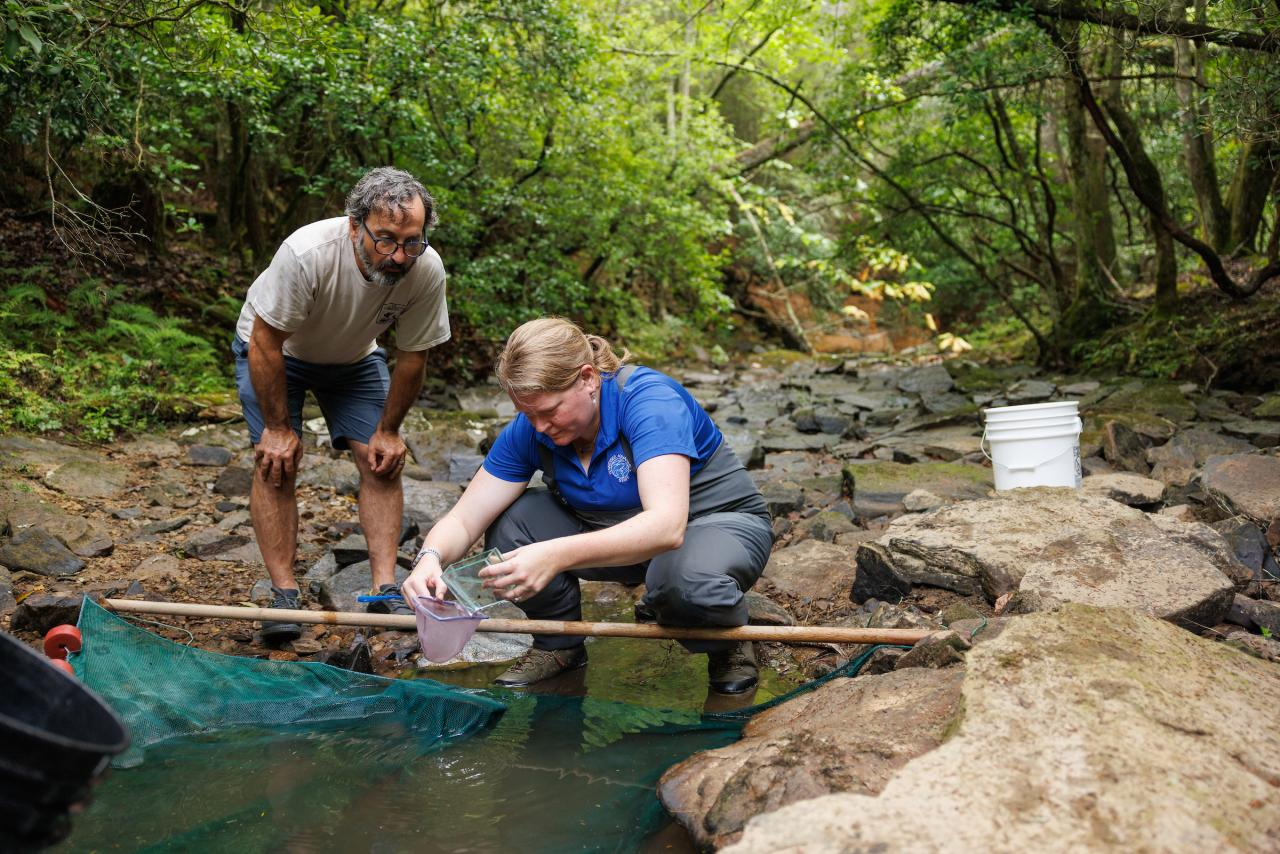 Tennessee Aquarium VP and Chief Conservation and Education Officer Dr. Anna George, right, and U.S. Fish and Wildlife Service Conservation Delivery Coordinator Geoff Call collect critically endangered laurel dace from a stream ravaged by a prolonged drought on the Cumberland Plateau. The rescue successfully relocated 105 adults into human care at the Tennessee Aquarium Conservation Institute’s headquarters near downtown Chattanooga. Photos by Doug Strickland/Tennessee Aquarium
Drought prompts emergency rescue of one of America’s most endangered aquatic species
Casey Phillips is a writer for the Tennessee Aquarium.
CHATTANOOGA — Few things trigger louder or more distressing alarm bells among freshwater biologists than watching a waterway dry up during a severe, prolonged drought. That’s especially true when the disappearing stream is home to one of America’s most imperiled fish.
In late July, reports of dramatically withered streams atop Walden Ridge north of Chattanooga spurred an emergency rescue operation to prevent the extinction of the federally endangered laurel dace, which scientists consider to be among the 10 most at-risk fish in North America.
This effort was carried out by representatives from the Tennessee Aquarium, the U.S. Fish and Wildlife Service, and the University of Georgia’s River Basin Center in coordination with the Tennessee Wildlife Resources Agency. In all, 105 adult laurel dace were removed from dangerously dry streams and successfully relocated to the Tennessee Aquarium Conservation Institute (TNACI) near downtown Chattanooga.
All but one of the collected fish survived the relocation and are now thriving in temporary human care, where they will remain until conditions in their few native streams are sufficiently improved for them to be returned safely.
 This laurel dace (Chrosomus saylori) was among dozens other collected from a stream on Walden Ridge north of Chattanooga to save the fish from drought. In the last 12 years, this minnow’s range has drastically dwindled to just two streams, and scientists consider it one of North America’s 10 most imperiled fish species.
To beat them, eat them: Enjoy a carp po’boy during an invasive-species panel
Written by Thomas Fraser Invasive carp jumping from the water at Barkley Dam in Kentucky. One option for eliminating carp is to eat them, and you can do just that on Saturday in Knoxville. Kentucky Department of Fish and Wildlife Resources
Learn about invasive species such as carp and zebra mussels at Conservation Fisheries panel
KNOXVILLE —To hear Bo Baxter tell it, carp actually doesn’t taste half bad.
He fairly gorged on the bottom feeders once long ago, during a long Mississippi River trip with the famed aquatic biologist David Etnier.
He prefers silver carp to, say, bighead carp, but the meat is fairly light and flaky on both and “I consider it excellent,” Baxter said. (Baxter serves on the editorial board of Hellbender Press).
Regardless their culinary appeal, the fish don’t belong anywhere near here, and will be among several different invasive species set to be the subject of a forum beginning at 6 p.m. Saturday, Aug. 23 at Remedy Coffee, 800 Tyson St., Knoxville.
And while you learn, you can enjoy a $5 carp po’boy and hushpuppies plate courtesy of the Tennessee Wildlife Resources Agency (TWRA), which is working to both limit the spread and establish a robust commercial market for the fish. Payson will provide the bread and remoulade.

Editorial: TVA executes sharp electric rate increase amid lack of transparency
Written by Southern Alliance for Clean Energy A protestor holds a sign during a 2021 demonstration against TVA’s plans for continued fossil fuel use outside the federal utility’s headquarters in Knoxville. Thomas Fraser/Hellbender Press
KNOXVILLE — On Thursday, August 22, the Tennessee Valley Authority’s (TVA) Board of Directors will meet in Florence, Alabama to authorize a 5.25 percent electric power rate increase without any public documentation showing why the increase is needed or how those additional revenues will be spent. This rate increase amounts to approximately a staggering half-a-billion-dollar increase for Tennessee Valley ratepayers. Only in the Tennessee Valley could a major utility raise rates without public scrutiny of financial documents.
The 5.25 percent rate increase coupled with last year’s 4.5 percent electric rate increase is strategically set just below a 10 percent threshold that would trigger renegotiation of hundreds of power supply agreements with local utilities. But even with this rate increase, TVA is still racking up debt at a rate not seen in decades.
Based on documents over a year old at this point, we can only guess what is driving TVA’s current financial woes: the largest buildout of fossil gas in the country this decade. These new fossil gas pipelines and power plants aren’t cheap, and TVA’s plan to increase reliance on gas is risky. Families and businesses across the Valley will see increased bills when gas prices rise again and as these new gas power plants become obsolete in just a few short years.
As climate threats to agriculture mount, could the Mississippi River delta be the next California?
Written by C. Stephenson, I. Ireland and P. Powell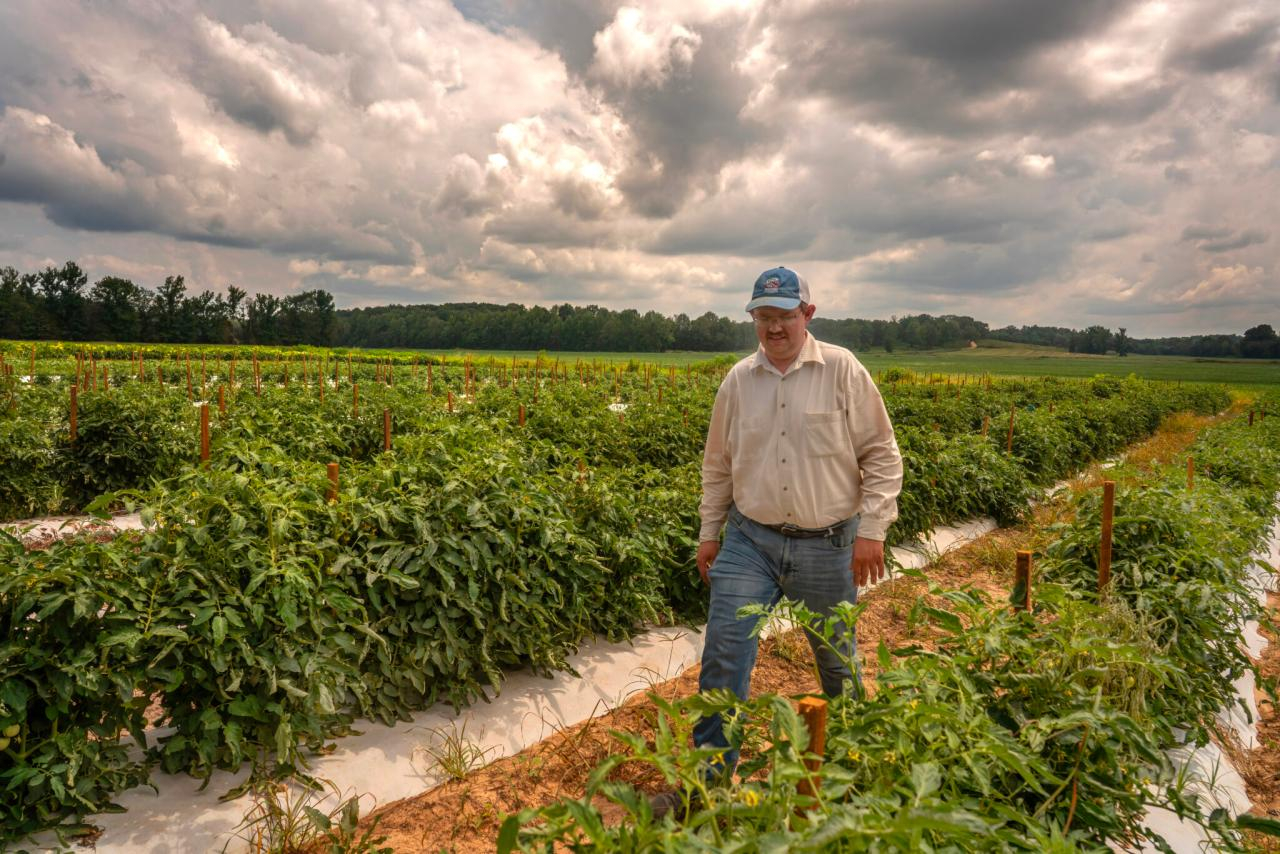 Michael Katrutsa walks through rows of tomatoes on his 20-acre produce farm in Camden, Tennessee. His crops also include sweet corn, watermelon, cantaloupe, peppers, cucumbers, okra and more. John Partipilo/Tennessee Lookout
Specialty crops take root as models emerge of American agriculture dominated by Delta
This story is a product of the Mississippi River Basin Ag & Water Desk, an independent reporting network based at the University of Missouri in partnership with Report for America, with major funding from the Walton Family Foundation. It was originally published by Tennessee Lookout.
CAMDEN — A smorgasbord of bright red tomatoes and vibrant vegetables line the walls of Michael Katrutsa’s produce shop in rural Camden, Tennessee. What began a decade ago as a roadside farm stand is now an air-conditioned outbuilding packed with crates of watermelon, cantaloupe and his locally renowned sweet corn — all picked fresh by a handful of local employees each morning.
The roughly 20-acre farm west of the Tennessee River sells about half of its produce through his shop, with the rest going to the wholesale market.
Farms like Katrutsa’s make up just a sliver of roughly 10.7 million acres of Tennessee farmland largely dominated by hay, soybeans, corn and cotton. Specialized machines help farmers harvest vast quantities of these commodity “row crops,” but Katrutsa said the startup cost was too steep for him. While specialty crops like produce are more labor-intensive, requiring near-constant attention from early July up until the first frost in October, Katrutsa said he takes pride in feeding his neighbors.
The World Wildlife Fund sees farms in the mid-Mississippi delta as ripe with opportunity to become a new mecca for commercial-scale American produce. California currently grows nearly three-quarters of the nation’s fruits and nuts and more than a third of its vegetables.
But as climate change compounds the threats of water scarcity, extreme weather and wildfires on California’s resources, WWF’s Markets Institute is exploring what it would take for farmers in West Tennessee, Mississippi and Arkansas to embrace — and equitably profit from — specialty crop production like strawberries, lettuce or walnuts.
- tennessee agriculture
- mississippi delta agriculture
- climate change farming
- how will climate change affect farming
- michael katrutsa
- camden, tennessee
- world wildlife fund
- gulf south blueberry growers association
- aglaunch
- don van de werken
- commodity market
- commodity economy
- food processing in rural areas
- monoculture
- delta harvest food hub
- southeast specialty crops
- local food
- small farmers
- local food economies
- report for america
Ijams pays homage to our flying friends at science soiree
Written by Thomas Fraser The live animal shows and educational lectures were a big draw during the annual Ijams Nature Center Hummingbird Festival held Aug. 17 at the center in Knoxville. Photos by John White/phocasso for Hellbender Press
 Annual Hummingbird Festival showcases Appalachia’s airborne denizens
 Children learn about the four seasons during one of many immersive educational activities available during the Aug. 17 Hummingbird Festival at Ijams Nature Center.
 Hunt mushrooms in the Smokies for the 2024 Continental Mycoblitz

This event was postponed on a previous date.
GATLINBURG — Partner with Discover Life in America to find and collect mushrooms and fungi specimens for identification and DNA sequencing and learn more about the diversity of Great Smoky Mountains National Park.
Register here for the event, set for 10 a.m. to 3 p.m. Oct. 16 at Twin Creeks, 1316 Cherokee Orchard Road in Gatlinburg.
The fungi roundup is in conjunction with the Summer 2024 Continental Mycoblitz, a continentwide fungi data-collection project.
Expect a 1-2 mile easy to moderate hike. Email Jaimie Matzko, This email address is being protected from spambots. You need JavaScript enabled to view it., for more information.
Updated 8/14: Plans for Foothills Parkway extension from Wears Valley to Gatlinburg enter newest public input phase
Written by Thomas Fraser and Rick Vaughan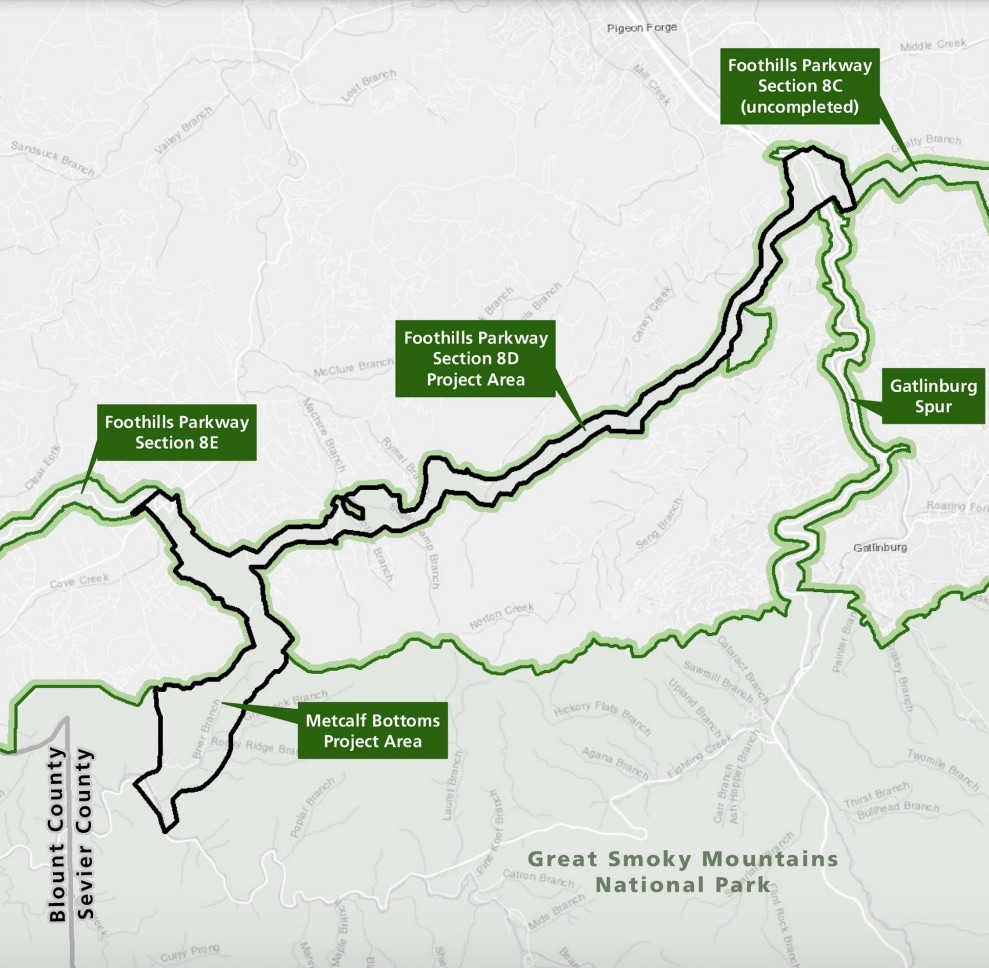
Critics have called for full Environmental Impact Statement amid threat to Southern Appalachian habitats; previous draft EIS identifies many rare, notable species in project right of way
GATLINBURG — Proposed construction of an unfinished section of Foothills Parkway from Wears Valley to the Gatlinburg Spur would traverse 9.8 miles of natural beauty that is home to multiple rare species identified in a 1994 study.
The federal government last month opened the latest round of public comment on the project, which would traverse Buckeye Knob and Cove Mountain and multiple aquatic and karst environments. Concerns raised by the public over the decades range from impacts on domestic water supplies and endangered or threatened species to the fact the roadway might be a catalyst for excessive tourism infrastructure in Townsend and Wears Valley.
The proposed route also extends through dense areas of pyrite, a highly acidic sulfate mineral (also known as fool’s gold) that can poison entire watersheds when exposed if proper erosion controls aren’t followed. Contamination of streams and creeks led to the decades-long delay in full construction of the existing parkway section (known as the missing link) that extends from Walland to Wears Valley.
- foothills parkway extension
- opposition to foothills parkway extension
- smokies foothills parkway
- nepa
- endangered species foothills parkway
- fhwa federal highway administration
- ea environmental assessment
- nepa national environmental policy act
- nhpa national historic preservation act
- national parks conservation association
- pyrite
- jeff hunter
- missing link of foothills parkway
A climate scientist explains why Debby did us so dirty
Written by Mathew Barlow Hurricane Debby made landfall near the town of Steinhatchee, Florida, at 7 a.m. Aug. 5, 2024, as a Category 1 storm. As it moved northeast, the storm stalled over the U.S. Southeast and delivered torrential rainfall. Some areas of South Carolina and Georgia recorded more than 20 inches of rain as the storm crawled northeast toward a second landfall (this time as a strong tropical storm) near Myrtle Beach, S.C. NOAA
A warming climate means more water vapor, which means bigger and wetter tropical storms
(This story was originally published by The Conversation.)
Tropical Storm Debby was moving so slowly, Olympians could have outrun it as it moved across the Southeast in early August 2024. That gave its rainfall time to deluge cities and farms over large parts of Florida, Georgia and the Carolinas. More than a foot of rain had fallen in some areas by early Aug. 7, with more days of rain forecast there and into the Northeast.
Mathew Barlow, a climate scientist at UMass Lowell, explains how storms like Debby pick up so much moisture, what can cause them to slow or stall and what climate change has to do with it.
What causes hurricanes to stall?
Hurricanes are steered by the weather systems they interact with, including other storms moving across the U.S. and the Bermuda High over the Atlantic Ocean.
A hurricane may be moving slowly because there are no weather systems close enough to pull the hurricane along, or there might be a high-pressure system to the north of the hurricane that blocks its forward movement. In this case, a high-pressure system over the western U.S. was slowing Debby’s forward progress and the Bermuda High — which is a large, clockwise circulation of winds that generally runs up the East Coast — wasn’t close enough to be a factor.
That’s similar to what happened with the remnants of Hurricane Harvey in 2017, one of the best-known examples of a stalled hurricane. High pressure over the U.S. blocked its forward movement, allowing it to drop more than 50 inches of rain on parts of Texas.
Slower-moving storms have longer to rain over the same area, and that can dramatically increase the risk of flooding, as the Southeast is experiencing with Debby.
- tropical storm debby
- tropical storms climate change
- how is climate change affecting the south
- georgia flooding
- south carolina flooding
- north carolina flooding
- debby rain
- how much rain debby
- hurricane forecasting
- mathew barlow
- how warm is the ocean
- is ocean warmer than normal
- hurricane climate change
- umass lowell climate science
More...
Compare notes on environmental education at annual conference

NATCHEZ TRACE — The 2024 Tennessee Environmental Education Association annual conference is set for Sept. 19-21 at Natchez Trace State Park.
The conference is open to any adult interested in education with the natural world as the foundation. Earn up to 31 PD/CE credits and network with an amazing and diverse group of educators from across Tennessee. The conference welcomes K-12 formal educators, informal educators, and more.
Bruderhof manufactures sustainable community in Monroe County
Written by C. Don Jones Hiwassee Bruderhof builds vermicomposting equipment at its manufacturing facility on the grounds of what was Hiwassee College in Monroe County, Tennessee. Hiwassee Products
Intentional Christian community settles into old Hiwassee College campus
HIWASSEE — We gathered in the old Hiwassee College theater to see “Common Ground” and hear from one of the farmers featured in the film.
Members of the new Bruderhof (from the German word, a place of brothers) community in Monroe County sat with us for the screening.
A few folks asked me: “Are you a farmer?”
“No, I am a United Methodist pastor,” I replied. The community is on the old Hiwassee College campus. The Holston Conference closed the college in 2019 and then sold the property to the Bruderhof in 2021
One older gentleman said, “I hoped to sit with a farmer.” I understood that. The community, in addition to being a self-supporting Christian Intentional Community, hoped to sell some of its new equipment to local farmers. Hobby gardeners, like me, would not want to invest the money in the new tools being offered.
Tennessee Valley Authority faces a push to get greener and more transparent
Written by Robert Zullo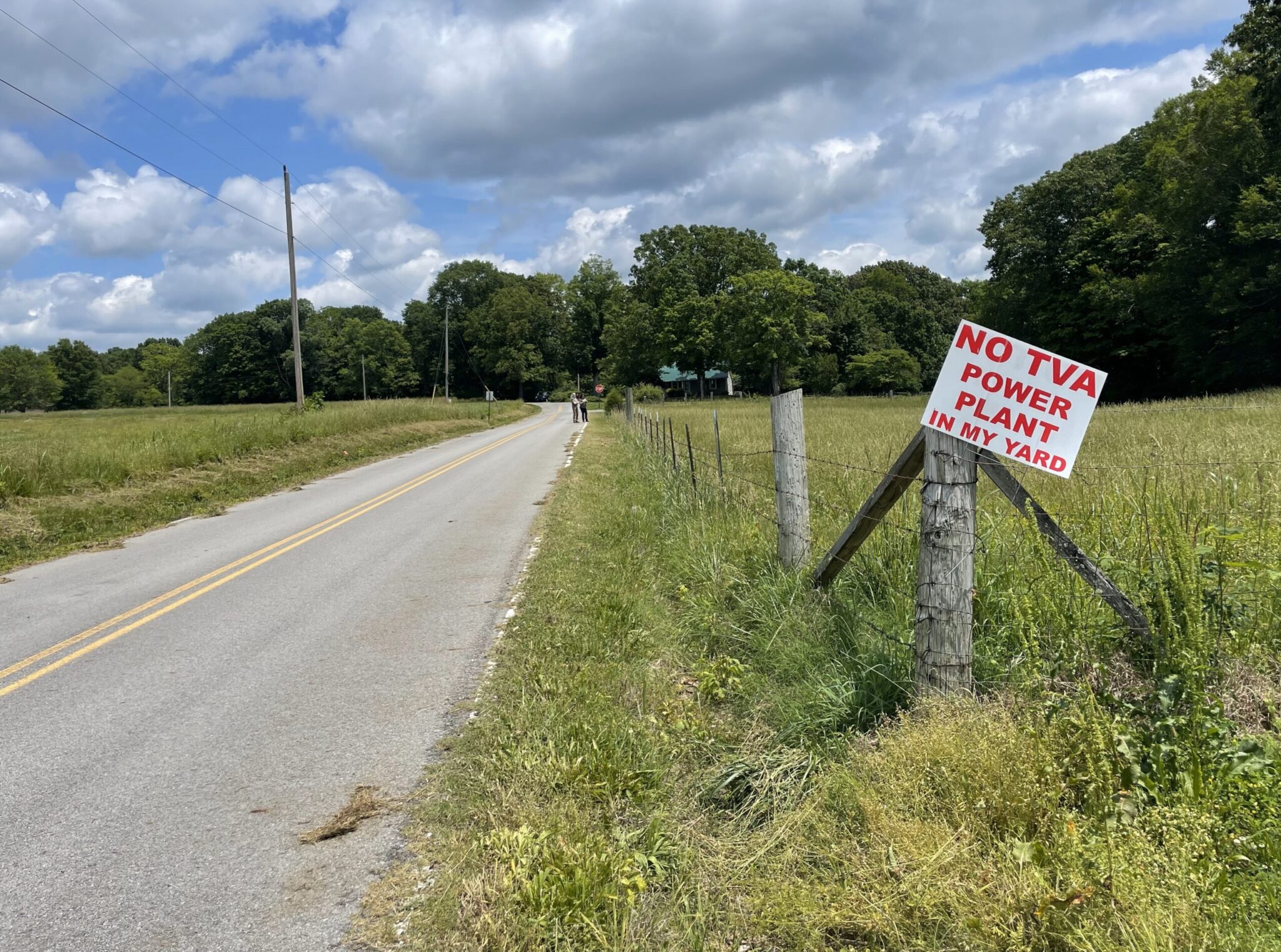 Nanette Mahler, left, and Tracy O’Neill walk along Macon Wall Road in Cheatham County, Tennessee, near the site of a proposed Tennessee Valley Authority gas power plant project. Local backlash against the proposal comes as the federal utility faces bipartisan legislation in Congress seeking to boost transparency in its planning process and scrutiny of TVA’s anemic renewable power growth compared to other utilities. Robert Zullo/States Newsroom
TVA ‘clearly a laggard’ in renewable energy
This article was originally published by Tennessee Lookout.
ASHLAND CITY — When he heard about the sale, Kerry McCarver was perplexed.
In 2020, the mayor of rural Cheatham County discovered that the Tennessee Valley Authority bought about 280 acres of rolling farmland “in the middle of nowhere” in his county, which lies just west of Nashville and is home to about 42,000 people.
He asked another county official who formerly worked for the TVA, the nation’s largest public power company, to find out what it planned to do with the land.
The answer they got was “future use,” and they speculated a solar farm might be in the works.
“It’s kind of the last we thought about it,” McCarver said during an interview in his office in May. “Then a year ago last summer, TVA called here needing a place to have a public meeting.”
The authority was now proposing a 900-megawatt natural gas-fired power plant, battery storage, pipelines and other associated infrastructure for the site, which came as a shock to McCarver and many other locals who felt it was wholly inappropriate for the area.
- tva
- tva clean energy
- tva board
- tva board meeting
- tva bull run
- tva coal fossil plant
- tva kingston
- kerry mccarver
- tva fossil plant
- tva gas plants
- cheatham county
- jeff lyash
- duke energy
- sierra club climate change
- southern alliance for clean energy
- stephen smith
- tennessee lookout
- tva governance transparency
- southern environmental law center
- energy alabama
Science takes wing at 2024 Ijams Hummingbird Festival
 Certified master bander Mark Armstrong tends gently to a tufted titmouse shortly before turning his attention to a hummingbird at the 2021 Ijams Hummingbird Festival, set this year for Aug. 17. Thomas Fraser/Hellbender Press
KNOXVILLE — Ijams Nature Center’s 14th annual Ijams Hummingbird Festival: A Celebration of Wings will bring back its popular marketplace and add new activities to its offerings from 7 a.m. to 1 p.m. Aug. 17.
A general admission ticket provides access to educational booths and activities, dip netting, live animal encounters, and a kids’ nature zone where children and families can create arts projects and crafts, conduct experiments, and more. Community science opportunities, guided nature walks, and new hands-on workshops also will be offered.
General admission tickets are $12 for adults (ages 13+) and $9 for children ages 3-12. Children under 3 are free. Ijams Nature Center members receive a 10 percent discount on the festival ticket price.
This year’s festival also brings back the marketplace, featuring handcrafted art, nature-themed items, local plants, and garden décor, as well as speaker sessions.
Attendees can choose to schedule a bird-banding demonstration for an additional charge. Each small group will get the opportunity for an up-close look at a hummingbird or another bird in a small-group setting with master bander Mark Armstrong. He will weigh, measure, band, and talk about the birds before allowing one person in each group to release the bird.
Bird banding demonstrations are offered in 30-minute sessions starting at 7 a.m.; the last appointment is 12 p.m. Your best chance to see a ruby-throated hummingbird being banded is during the earlier appointments.
The 14th annual Ijams Hummingbird Festival: A Celebration of Wings is sponsored by Accenture, HomeTrust Bank, Stanley’s Greenhouse, Tennessee Wildlife Federation, and Wild Birds Unlimited Maryville.