
Sustainability (498)
Children categories

Sustainable Development Goals (912)
The Sustainable Development Goals are a universal call to action to end poverty, protect the planet and improve the lives and prospects of everyone, everywhere. The seventeen Sustaiable Development Goals (SDG) were adopted by all UN Member States in 2015, as part of the 2030 Agenda for Sustainable Development which set out a 15-year plan to achieve the Goals.
Nashville Zoo gives hellbenders a head start in Middle Tennessee
Written by Nashville ZooThe species is listed as endangered in the state of Tennessee; zoo heads up years-long conservation effort
This Nashville Zoo blog post is reprinted with permission.
NASHVILLE — Nashville Zoo’s ectotherm team, in partnership with Tennessee Wildlife Resources Agency and Tennessee State University, traveled to a waterway in Middle Tennessee to successfully release a total of 27 eastern hellbender salamanders back into the wild. These hellbenders had been raised since 2018 at the Zoo as part of a headstart program. Since the start of this conservation initiative, the Zoo has released more than 100 hellbenders into local Tennessee streams to help bolster the population of this state-endangered species.
The hellbenders released this year had been raised since 2018 at the Zoo as part of a headstart program, after being collected as eggs from streams in Middle Tennessee. Each animal was fitted with a radio transmitter earlier this year, allowing a team of graduate students to track and monitor the hellbenders throughout the summer. This is the fourth group of hellbenders to be released back into the wild since the summer of 2021.
Learn about TVA’s switch from coal to natural gas at June 12 teach-in

Water supply demands could strain Duck River’s rare riverine habitat
Written by Anita Wadhwani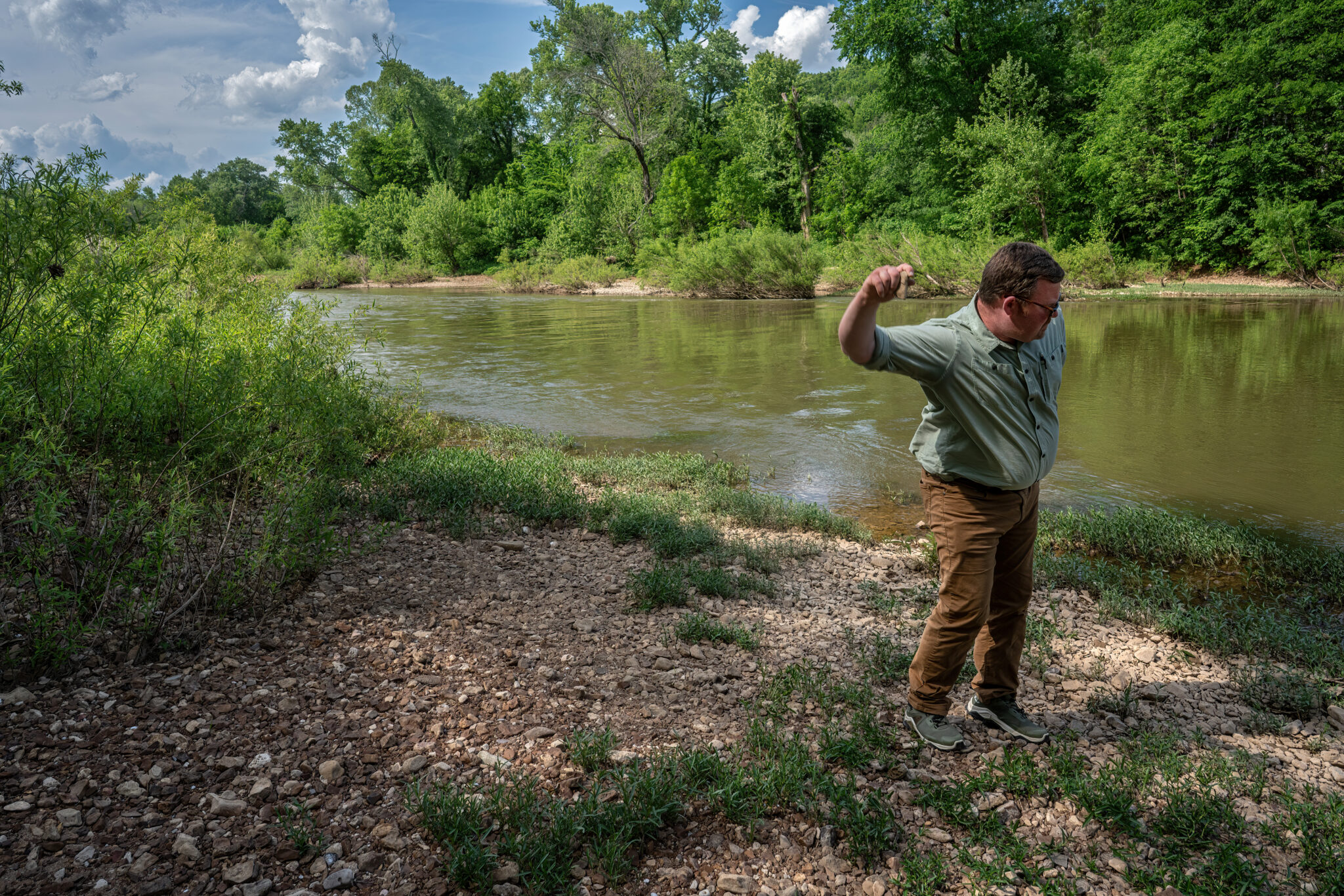 John McEwan, whose family has lived on the banks of the Duck River since the 1860s, skips stones on the Duck River. Environmental groups fear excessive demand is fueling drawdowns that are affecting the rich biodiversity of the Middle Tennessee river.&nsp; Tennessee Lookout/John Partipilo
Long time residents and conservation groups say industry lured by the state, population growth are draining water from a river prized for its biodiversity
This story was originally published by Tennessee Lookout.
COLUMBIA — When Gov. Bill Lee announced the state had lured a General Motors lithium battery supplier to Spring Hill three years ago, it was his largest economic announcement to date:
A $2.6 billion corporate investment; 1,300 new jobs; a major stepstone along Tennessee’s path to become an EV hub — helped along by a then-record $46,000 per job in taxpayer incentives.
The factory deal’s less conspicuous specs — its continuous need for 1.4 million gallons of water per day — is now figuring in a larger battle pitting citizens and conservation groups against state environmental regulators.
Last month, the Tennessee Department of Environment and Conservation (TDEC) granted permission to Columbia Power and Water Systems — which pumps water to the new Ultium Cells plant — to increase its current withdrawals from the Duck River by 60 percent.
It’s one of eight water companies along the Duck River seeking to dramatically increase water draws to meet rising demands for water in the rapidly growing five-county region southwest of Nashville.
- duck river
- duck river biodiversity
- tennessee lookout
- middle tennessee environment
- lithium batteries
- gov bill lee environment
- john mcewan
- hickman for the duck
- ultium cells plant water use
- doug jones duck river
- anita wadhwani
- water demand
- water supply
- economic growth
- general motors
- southern environmental law center
- tennessee department of environment and conservation
- tdec
- columbia power and water systems
- spring hill, tn
- george nolan
Hellbender Press garners first-place award for investigation into proposed Oak Ridge airport
Written by Thomas Fraser
The honor continues Hellbender Press’s tradition of excellence in journalism.
KNOXVILLE — Hellbender Press: The Environmental Journal of Southern Appalachia, was honored with a first-place award by the East Tennessee Society of Professional Journalists (ETSPJ) for its probe into a controversial municipal airport proposed by the city of Oak Ridge.
Reporters Wolf Naegeli and Ben Pounds and Hellbender Press editor and publisher Thomas Fraser accepted the award during ETSPJ’s 2023 Golden Press Card awards, held May 16 at Maple Hall in downtown Knoxville. The honors, which are bestowed upon television, radio, print and digital media, “strive to honor the best journalism in the eastern region of Tennessee from the past year,” according to ETSPJ.
Hellbender Press was honored with first place in the digital space for its investigation into the proposed airport, which the city maintains would juice economic development, especially in the high-tech business realm.
Follow some protocols during No-Mow May or risk the sting of a city codes violation
Written by Thomas Fraser Gerry Moll is seen in the native garden of his home in the 4th and Gill neighborhood of Knoxville in this file photo. Moll tends to his natural habitat in keeping with city codes protocols. Ben Pounds/Hellbender Press
City: Overgrown lots don’t automatically qualify as wildlife habitat
KNOXVILLE — City government wants people to know that though “No Mow May” is a worthy observation there are still some protocols residents have to follow to avoid codes violations and potential fines.
The month of May is hyped as a prime time to refrain from cutting your grass or portions of your lawn to allow pollinating plants and the pollinators they support to get six legs up late spring and early summer nectar season. It’s also an occasion to consider the fact that traditional lawns are largely ecological deserts.
“No Mow May” is a quick and catchy name for a movement that aims far beyond not mowing the yard for a month,” according to Bee City USA, a proponent of keeping your yard real and wild when and where it is practical.
“It’s more than long grass and dandelion blooms. It’s a gateway to understanding how we share our lawns with many small creatures.”
It goes beyond bees and butterflies and other pollinating insects. Many ground-nesting birds are on the decline due to loss of grassy habitat. Native grasses also serve as habitat for small mammals such as rabbits and mice, which in turn provide a buffet for raptors such as owls, hawks and eagles.
Hellbender Press has reported on cultivation of such natural landscapes and habitats within the city limits. Groups such as the Native Plant Rescue Squad can also provide plants and guidance.
Rare Tennessee salamander at center of new Endangered Species Act lawsuit
Written by Southern Environmental Law Center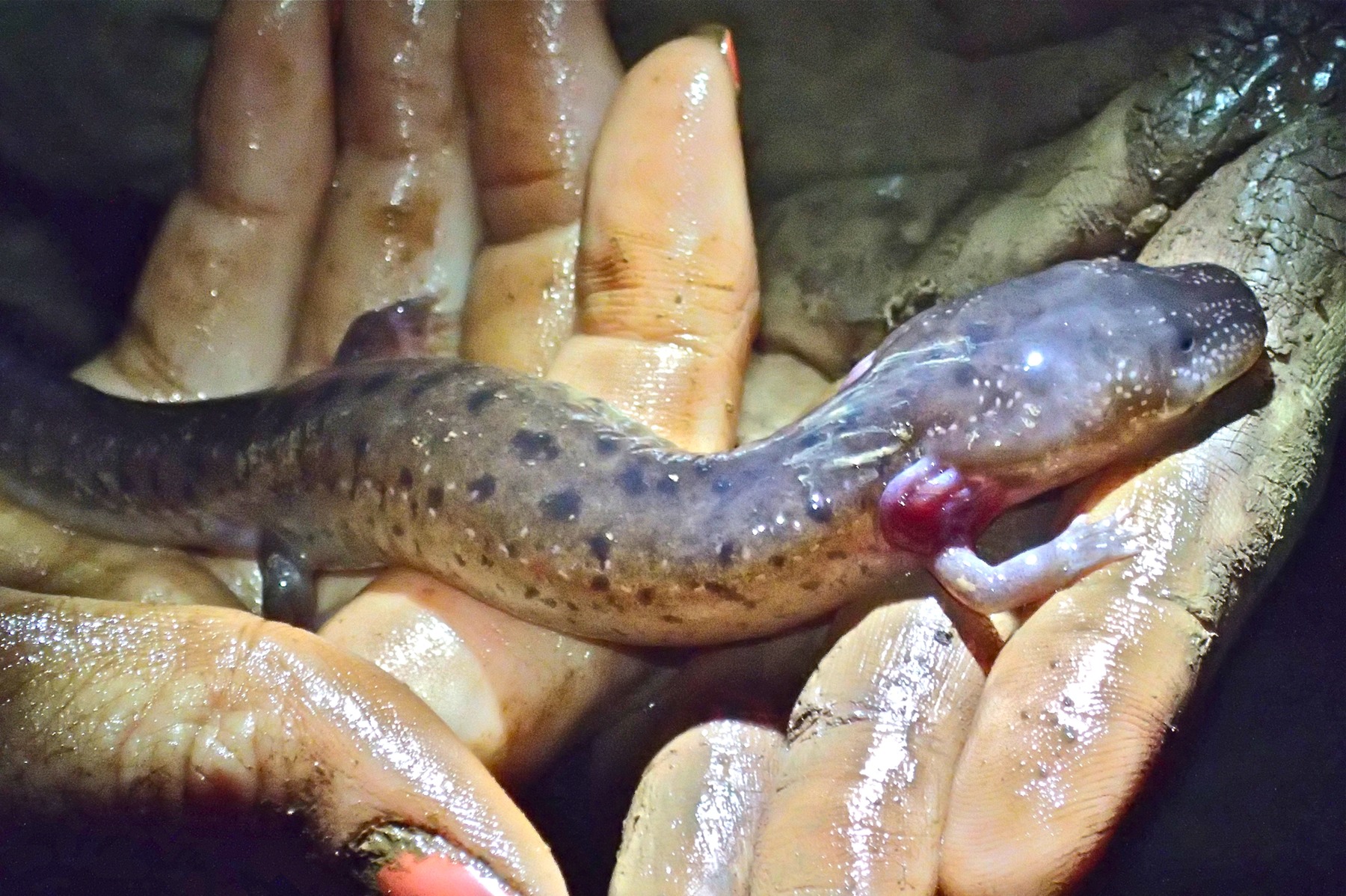 Environmental groups are suing the U.S. government to force addition of the Berry Cave salamander to the Endangered Species List. It is one of the largest cave salamanders, and can grow up to 6 inches. Dr. Matthew Niemiller
50 percent of the known Berry Cave salamander population is in rapidly developing Knox County
KNOXVILLE — The Southern Environmental Law Center, on behalf of the Center for Biological Diversity, sued the U.S. Fish and Wildlife Service on May 7, arguing that the agency violated federal law when it denied Endangered Species Act protections for a rare salamander that is only found in a handful of East Tennessee caves.
The Berry Cave salamander has pink feathery gills, lives its entire life in caves, and can grow to over 9 inches in length — making it the largest cave-dwelling salamander in North America. The salamander is also incredibly rare. Populations have been found in just a small number of isolated caves, and in several of these caves only one salamander has ever been observed.
Unique to our bioregion
“The Berry Cave salamander is found nowhere else on Earth, and its populations are dwindling in the face of rapid development and a changing climate,” said Liz Rasheed, a senior associate attorney at the Southern Environmental Law Center. “This lawsuit seeks to correct an egregious error that puts this incredible salamander at an even greater risk of extinction.”
- berry cave salamander
- endangered species act
- southern environmental law center
- center for biological diversity
- matthew niemiller
- us fish and wildlife service
- liz rasheed
- meads quarry cave
- chelsea stewartfusek
- knox county caves
- east tennessee water quality
- endangered species act lawsuits
- salamanders
- salamander biodiversity
- salamander populations
- mead's quarry
Baby sturgeon hit the river in latest phase of 25-year restoration effort
Written by Doug Strickland This juvenile lake sturgeon was one of 50 released into the Tennessee River from Chattanooga’s Coolidge Park on May 2. The lineage of the fish can be traced millions of years, but overfishing, dams and habitat destruction has led to widespread population declines throughout its natural range. Doug Strickland/Tennessee Aquarium
Lake sturgeon recovery links rivers and experts in Tennessee and Wisconsin
Doug Strickland is a writer for the Tennessee Aquarium in Chattanooga.
CHATTANOOGA — Just across from the iconic peaks of the Tennessee Aquarium on the shore of the Tennessee River, a group of scientists with the Tennessee Aquarium Conservation Institute gathered on an early May morning to restore a primordial fish to the state’s primary waterway.
One by one, they carefully navigated down a boat ramp at Coolidge Park before gently releasing juvenile lake sturgeon, each just under a foot in length, into the river’s shallows.
These 50 sturgeon were the final youngsters to be reintroduced from a class of hundreds of sturgeon fry that arrived at the Conservation Institute’s freshwater field station last summer. Their introduction to the Tennessee River represented the latest milestone of a decades-long conservation effort to restore this state-endangered fish.
Despite reclaiming their one-time home in the waters of the Volunteer State, these newfound Tennesseans began life some 850 miles north of Chattanooga.
- lake strugeon release
- lake sturgeon working group
- lake sturgeon
- sturgeon in tennessee river
- sturgeon reintroduction
- sturgeon guard
- cumberland river sturgeon
- wolf river in wisconsin
- showano, wisconsin
- coolidge park chattanooga
- tennessee aquarium conservation institute
- tennessee aquarium
- sarah kate bailey
- warm springs national fish hatchery
- margaret stadig
- clean water act of 1972
- helaina gomez tennessee aquarium
- are there sturgeon in tennessee river?
- sturgeon spawning
- doug strickland
Tennessee’s mighty Duck River is gravely imperiled
Written by Anita Wadhwani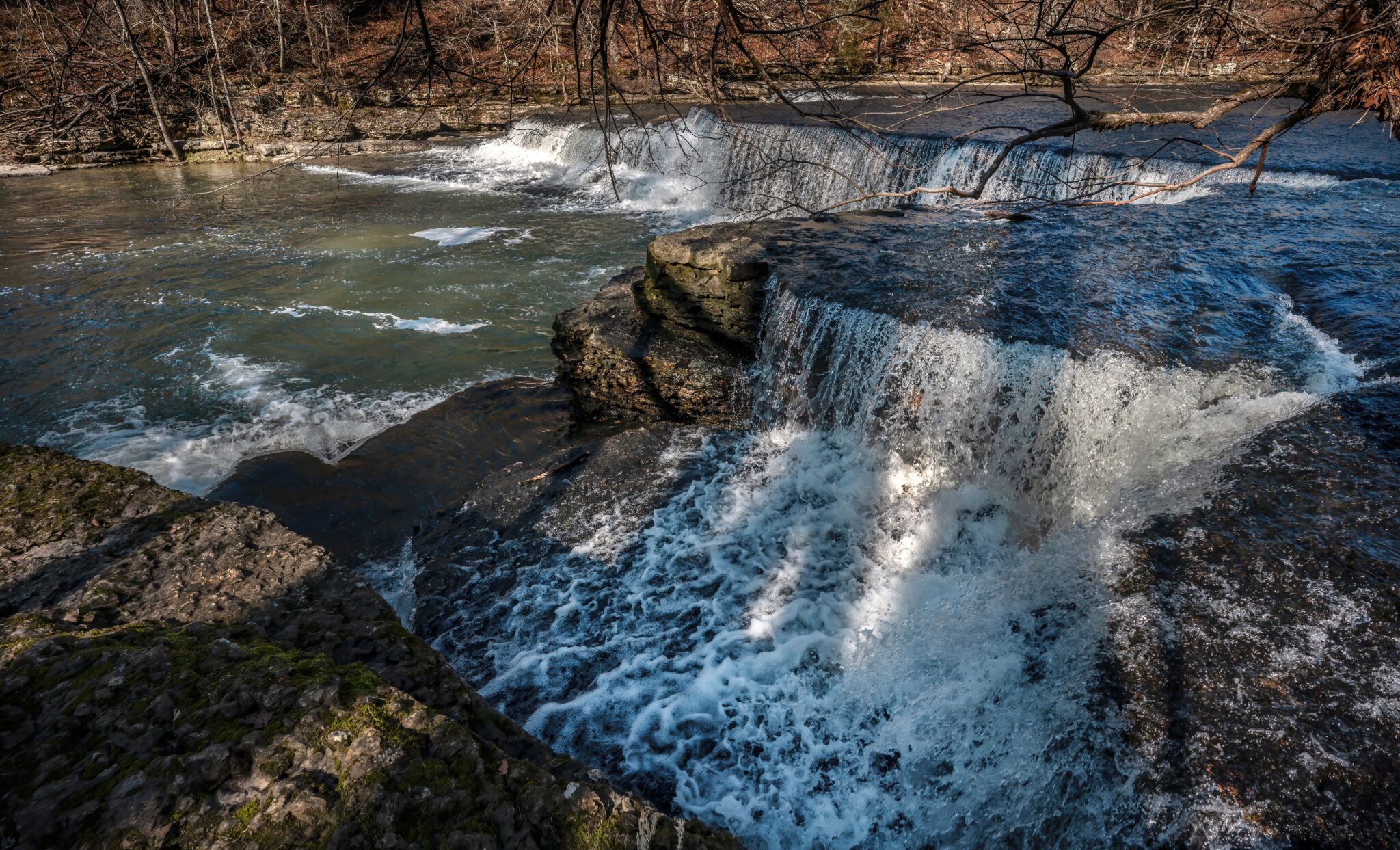 A view of the Duck River, Tennessee longest river, from Old Stone Fort in Manchester. John Partipilo/Tennessee Lookout
The Duck landed third on American Rivers’ list of most endangered rivers in the U.S.
This story was originally published by Tennessee Lookout.
COLUMBIA — The Duck River, which winds through seven Middle Tennessee counties for more than 260 miles before reaching the Tennessee River, is among the most endangered rivers in the United States, according to a new report by the advocacy group American Rivers.
Threatened by population growth, development and climate change “urgent action is needed to safeguard this vital ecosystem,” the report released Tuesday said.
The Duck River serves as the source of drinking water for nearly 250,000 Tennesseans. Industry and agriculture depend on it, too. Often considered one of Tennessee’s most pristine waterways, it draws more than 150,000 people each year for boating, fishing and other recreation. Last year, in an effort to protect the river from a controversial plan to establish a landfill near its banks, state lawmakers designated a portion of the river in Maury County an official state scenic waterway.
Resisting the alien invasion: Oak Ridge work party highlights threat of invasive plants
Written by Ben Pounds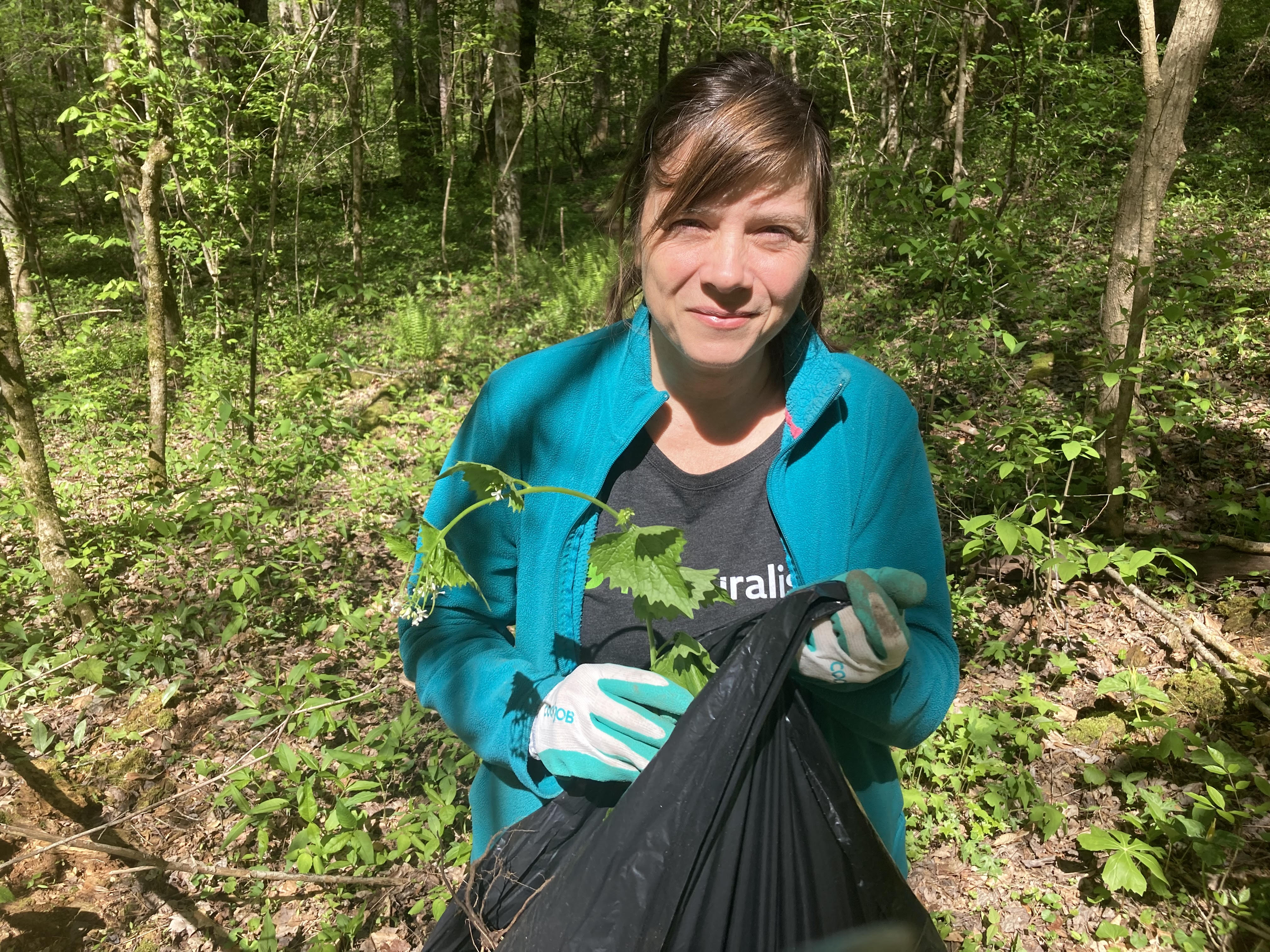 Regina Santore with the Wild Ones Smoky Mountains Chapter puts garlic mustard into a bag during an April volunteer event along a greenway in Oak Ridge. Ben Pounds/Hellbender Press
Volunteers fight exotic and invasive garlic mustard on Oak Ridge greenway
OAK RIDGE — Plants from around the world are overrunning the Southeast’s wild places, causing problems for native flora and fauna.
It’s a problem that’s grabbed the attention and work of dedicated organizations. One of them, the Tennessee Invasive Plant Council has many strategies to solve this problem: volunteer weed-pulling events, guides to help gardeners find native plants from which to choose, and even legislation. Its vice president, Jamie Herold, has many thoughts on the issue. She was eager to share them over pizza after a morning of pulling one such invasive, garlic mustard, at an event in Oak Ridge organized by Tennessee Citizens for Wilderness Planning, and Greenways Oak Ridge.
The event involved pulling garlic mustard, a plant originally from Europe, from the edge of the woods behind apartments on West Vanderbilt Avenue. This area includes the Wildflower Greenway, a trail full of wildflowers that locals have been eager to protect from the garlic mustard’s domination.
- exotic invasive
- exotic species
- invasive plants
- invasive plant control
- invasive species
- oak ridge greenway
- garlic mustard
- tennessee invasive species
- tennessee invasive plant council
- jamie herold
- regina santore
- roger macklin
- wildflower greenway
- tennessee citizens for wilderness planning
- greenways oak ridge
- wild ones smoky mountains chapter
- biodiversity
You feel lucky? Smokies sets synchronous firefly lottery.
GATLINBURG — Great Smoky Mountains National Park will host the annual synchronous firefly viewing opportunity at Elkmont from Monday, June 3 through Monday, June 10. The public may apply for the limited viewing opportunity by entering a lottery for a vehicle reservation through www.recreation.gov.
The lottery opens for reservation applications on Friday, April 26 at 10 a.m. EDT and closes Monday, April 29 at 11:59 p.m. EDT. Using the lottery system ensures everyone who applies for a reservation has an equal chance of getting one.
Want to help wildlife? TWRA to host huge habitat-improvement event

Sharing the love: Grayson Subaru presents $39K check to Ijams Nature Center
Written by Ijams Nature Center Grayson Subaru presented a check for $39,000 from Subaru of America’s 2023 Subaru Share the Love Event to Ijams Nature Center on April 24. Funds will be used to expand the popular Ijams Nature Playscape at Grayson Subaru Preserve and the Mead’s Quarry Lake swim area. Ijams Nature Center
KNOXVILLE — Grayson Subaru gave $39,000 to Ijams Nature Center to expand the popular Ijams Nature Playscape at Grayson Subaru Preserve and the Mead’s Quarry Lake swim area.
The local retailer chose the nonprofit nature center as its hometown charity for Subaru of America Inc.’s 2023 Subaru Share the Love® Event. From Nov. 15, 2023, to Jan. 2, Subaru and its retailers donated a minimum of $300 for every new Subaru vehicle purchased or leased at more than 628 of its retailers nationwide to several national charities and a hometown charity chosen by each retailer.
“Subaru of America and Grayson Subaru are committed to the communities we serve,” Subaru Sales Manager JC Marquardt said. “We do that by showing support in ways that make a meaningful difference, and we’re incredibly grateful to our customers, who share our values and are committed to doing the same. This is a proud day for all of us.”
Work has already begun on Phase 2 of the Ijams Nature Playscape.
“Thus far, Ijams staff have scouted the new trail and, with the help of 115 trained volunteers, removed invasive species from about one acre of the new section,” Ijams President and CEO Amber Parker said. “This is the most time-consuming part of the process, because there is a more diverse mix of invasive and native species, and removal has to be done by hand.”
In addition to preparing the upper section of the 13.46-acre property, Ijams is planning a new feature to Phase 1 of the playscape after conducting a survey of the people who were using it.
“We learned that people wanted a way to cross through the mushier spots of the floodplain in an area we call the ‘Soggy Bottom Room,’ so we’re creating a narrow path of wood over utility poles to make a bog walkway,” she said. “We recently salvaged a large palette that was mired in the mud along the Tennessee River and will use that reclaimed wood in the project. There are perks to having an Ijams River Captain keeping our waterways clear!”
Parker said improvements to the Mead’s Quarry swim area will start at a later date.
Smokies accessibility program opens doors to the outdoors for everyone
Written by Great Smoky Mountains National Park Adaptive program participants in Great Smoky Mountains National Park during a backcountry trip. The park plans to expand its program this year with multiple outings throughout America’s most-visited national park. National Park Service
Adaptive ranger-led programs include trail, lake and camping outings
GATLINBURG — The National Park Service (NPS), in partnership with Catalyst Sports, Knox County, Kampgrounds of America Foundation and Friends of the Smokies, will expand adaptive ranger-led programs in 2024. Using assistive technology, the ranger-led programs are designed for visitors of all abilities and their families to learn about the natural and cultural history of Great Smoky Mountains National Park.
“We strive to create equal and accessible experiences for visitors of all abilities in Great Smoky Mountains National Park,” said Superintendent Cassius Cash. “And we are thrilled to work with our partners to expand the adaptive programs and offer off-road wheelchairs.”
Chattanooga Earth Day Week continues

 This image of Earth captures the 2017 eclipse shadow. NASA
Get dirty. Get wet. Have fun. Love your mother.
Celebrate our planet’s beauty and bounty at one of many Earth Day events in the region this weekend and beyond. You can pick up trash, kayak a river and even get sustainable fashion tips and tricks.
The official observation of Earth Day 2024 is Monday, April 22, but ways to give back and respect the Earth abound for days before and after. Here’s a sampling of observations and activities. And remember: Every day should be Earth Day.
Knoxville
— Little River Watershed Association plans its annual cleanup and paddle for 12-4 p.m. Saturday, April 20. Participants will put in at Peery’s Mill near Townsend and remove trash from the river for about three hours before taking out at Sevierville Bridge. Albright Grove Brewery will offer beer after the cleanup. A limited number of kayaks are available for use, and a shuttle is available. Get more information and sign up here.
— Keep Knoxville Beautiful will hold the South Knoxville Community Cleanup from 9 a.m. until noon Saturday, April 20 starting at Mary Vestal Park, 522 Maryville Pike, Knoxville. The group is removing litter from South Knoxville streams, roads and parks. All reserved spots are full, but Amanda Seale, director of programs for Keep Knoxville Beautiful said her group still welcomes help from anyone who shows up.
— The third annual Fleurish: A Sustainable Fashion Event (and Fundraiser) at Ijams Nature Center will bring eco-friendly and sustainable Punk vs. Funk designs to the runway Sunday, April 21. Tickets are $30 and are available at Ijams.org/fleurish. All proceeds support Ijams Nature Center. The cocktail hour from 6 until 7 p.m. will feature photo ops on the “green” carpet, education stations and information about conservation efforts in the fashion realm, as well as a cash bar featuring punk and funk signature cocktails, and food from Coffee & Chocolate, Cafe 4, and The Kennedy. The fashion show will feature clothing with sustainable, reused and recycled materials from 25 designers. Following the fashion show, attendees will be able to meet the artists, designers, and models on the nature center’s hillside. Brent Hyder and Duck Experience will provide live music. Ijams Visitor Services Director Sarah Brobst said there may be some surprise elements as well.
“Fleurish shows how the average consumer can make changes to their day-to-day lives while never losing sight of the beauty of nature and the human experience,” she said. She encouraged the audience to come dressed in their favorite punk or funk fashions.
— The University of Tennessee will host an Earth Day Festival from 11 until 2 p.m. April 22 at the Student Union Plaza.
“Come meet campus and community organizations, enter some giveaways, participate in sustainable activities, and more!,” according to organizers. Other Earth Week events will continue on and near the campus that week. A full list of them is online.
- earth day 2024
- what can i do for earth day?
- little river watershed association
- keep knoxville beautiful
- fleurish knoxville
- ijams nature center
- university of tennessee earth day
- brent hyder
- duck experience
- sarah brobst
- chattanooga parks and outdoors
- chattanooga national park city
- chattanooga earth day events
- knoxville earth day events
- asheville earth day events
- adventure library
- greenway farms
- buncombe county sports park
- lake julian
- green built alliance
- earth day 5k
- south knoxville litter cleanup
More...
ORNL chemists invent a more efficient way to extract lithium
Written by Oak Ridge National Laboratory Oak Ridge National Laboratory
OAK RIDGE — Chemists at the Department of Energy’s Oak Ridge National Laboratory have invented a more efficient way to extract lithium from waste liquids leached from mining sites, oil fields and used batteries. They demonstrated that a common mineral can adsorb at least five times more lithium than can be collected using previously developed adsorbent materials.
“It’s a low-cost, high-lithium-uptake process,” said Parans Paranthaman, an ORNL Corporate Fellow and National Academy of Inventors Fellow with 58 issued patents. He led the proof-of-concept experiment with Jayanthi Kumar, an ORNL materials chemist with expertise in the design, synthesis and characterization of layered materials.
“The key advantage is that it works in a wider pH range of 5 to 11 compared to other direct lithium extraction methods,” Paranthaman said. The acid-free extraction process takes place at 140 degrees Celsius, compared to traditional methods that roast mined minerals at 250 degrees Celsius with acid or 800 to 1,000 degrees Celsius without acid.
Lithium is a lightweight metal commonly used in energy-dense and rechargeable batteries. Electric vehicles, which are needed to achieve net-zero emissions by 2050, rely on lithium-ion batteries. Industrially, lithium is extracted from brines, rocks and clays. The ORNL innovation may help meet rising demand for lithium by making domestic sources commercially viable.
Prepare for a rare period of cicada pandemonium
Written by Stephen Lyn Bales Toward the end of their lives, periodical cicadas emerge from the ground, molt into their adult wardrobe to find each other and reproduce before they die. Periodical cicada nymphs spend their entire 13-year or 17-year lives underground seeking nourishment in roots and slowing growing before time to emerge. Stephen Lyn Bales/Hellbender Press
Billions upon billions of cicadas will emerge this spring and summer during a rare convergence of broods
Three years ago, Southern Appalachia experienced the emergence of 17-year cicadas’ Brood X. And already, we’re up for another wave of cicadas!
KNOXVILLE — Periodical cicadas are rare. Of the roughly 3,400 cicada species on the planet, only seven of those live underground as nymphs for a staggeringly odd long time.
It gets odder. The seven species are only found in eastern North America, living in 15 separate populations known as “broods.” Some of those broods remain in their subterranean tunnels for 13 years, and some for 17 years.
When their life cycle is up, the strange little insects emerge by the millions to molt into adults and with their new golden wings fly up into the trees where the females and males find each other. They mate, she lays eggs, and then they drop dead.
When the early American colonists moved to their new homeland in the 1600s they were horrified by these oddly spaced natural phenomena. Pilgrims at Plymouth reported them in 1634. With only a sprinkling of education to serve them, they naturally turned to their only field of reference and the stories from the Bible. The New World newbies deemed them to be swarms of locusts from the list of Biblical Plagues beset on Egypt along with water turning to blood, lice, boils, flies, hailstones and the killing of first borns. And why not? To them a bug was a bug, with some more frightening than others.
- cicada in east tennessee
- cicada life stage
- cicada lifecycle
- cicada brood convergence
- cicadas 2024
- what are cicadas?
- thomas jefferson on cicadas
- biblical plagues
- can humans eat cicadas
- cicada recipe
- stephen lyn bales
- scientific american
- orthoptera
- hemiptera
- cicada brood xix and xiii
- university of connecticut biologist john cooley
Apathy threatens the planet. How do we get people to care?
Written by David Shiffman Hellbender Press editor and publisher Thomas Fraser takes a break during a kayak run on the Pigeon River. A new study bolsters the idea that one way to turn people on to the importance of nature is to get them outside. Jeremy Fraser/Hellbender Press
New research backs up conventional wisdom that getting people outdoors inspires them to conserve nature.
This story was originally published by The Revelator.
The natural world faces many threats, but to many environmentalists, none are so baffling and heartbreaking as public apathy toward those threats.
How do we get more people to care about the natural world so they’re moved to stand up and defend it? The answer is complex, of course, because humans are complex. But part of it can be found in a simple truth: Some people don’t care much about the natural world because they haven’t experienced nature directly.
For years experts have pointed to a potential solution: Getting people to spend more time in nature, they say, can help make them care more about threats to our environment and adopt more pro-environment behaviors.
Momentum builds slowly for TVA’s post-coal plans
Written by Ben Pounds Supercomputer simulation of plasma turbulence in a spherical tokamak, which is an experimental machine designed to harness the energy of fusion. Image courtesy of Walter Guttenfelder, Princeton Plasma Physics Laboratory and Filippo Scotti, Lawrence Livermore National Laboratory via DOE.
Fusion research, natural gas, solar power and battery improvements at heart of TVA’s plans to wean itself off coal
OAK RIDGE — The Tennessee Valley Authority is phasing out coal and announcing developments tied to other energy sources at two plants that sit on either side of Oak Ridge.
One of the options includes a fusion test site. Scientists have long pursued fusion energy, though the technology remains in infancy and has yet to generate electricity anywhere.
The TVA coal plant on Edgemoor Road in the Claxton community in Anderson County closed Dec. 1 last year. TVA remains uncommitted to any plans for most of the land around the plant. A company recently announced, however, that it plans tests connected to fusion power in a small part of one of Bull Run’s old buildings by 2028. It will be an experiment and not generate power directly.
Meanwhile, TVA plans to retire Kingston Fossil Plant on Swan Pond Road in Harriman by the end of 2027. Its nine coal-fired units power about 818,000 homes. To replace the power generated at the plant, TVA plans to build a new complex at the Kingston plant’s site, combining natural gas, solar power and battery storage.
TVA plans to retire all its coal plants by the 2030s.